
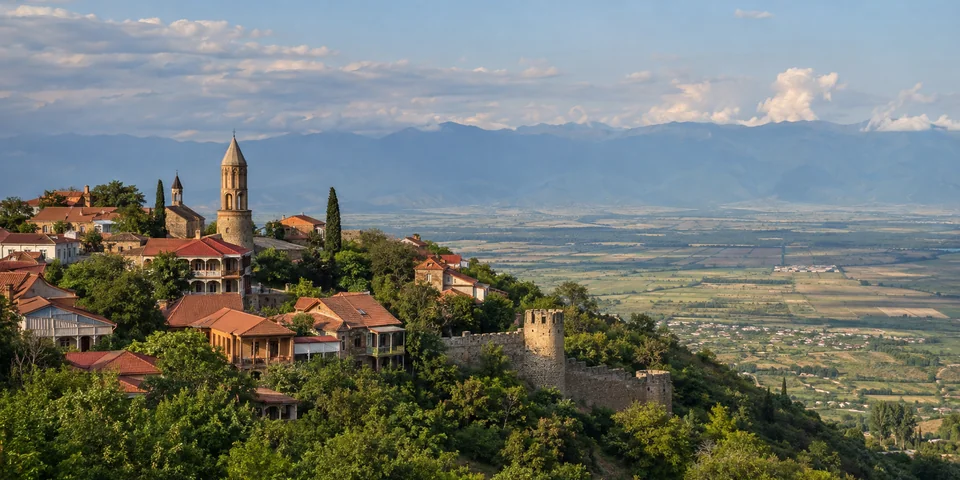
In brief: Four complete Georgia itineraries for 1, 2, 3, and 4 weeks of travel. Covers Tbilisi, Kakheti wine country, Kazbegi, Kutaisi, Svaneti, Batumi, Upper Adjara, Vardzia, Borjomi, and more with practical transport and timing advice.
Georgia is one of those countries that rewards both short visits and extended stays. A week gives you a strong taste of the capital, the wine region, and the mountains. Two weeks adds the western half of the country and the medieval tower villages of Svaneti. Three weeks opens the Black Sea coast and the cave monasteries of the south. A month lets you reach the truly remote corners that most visitors never see. Here are four itineraries scaled to fit your timeframe, with practical transport notes for every leg.
Five Things to Consider Before You Plan
1. How Long Do You Need?
Moving around Georgia chews up more time than the map suggests. Roads are winding, public transport runs on flexible schedules, and you will want to stop constantly for the views. Anything less than a full week and you should base yourself in Tbilisi with day trips. Two to four weeks lets you explore multiple regions at a comfortable pace.
2. When to Visit
Each season changes what may be accessible. Late April through June brings wildflowers and pleasant temperatures. September and October coincide with the grape harvest. Summer often brings wider mountain access but also heat and city crowds. Winter restrictions can affect mountain roads while ski routes around Gudauri remain important. Check official road status for each weather-dependent leg.
3. Where to Start
Both Tbilisi and Kutaisi have international airports. Budget carriers often fly into Kutaisi, while Tbilisi has broader connections. All four itineraries start and end in Tbilisi. If flying into Kutaisi, take the Georgian Bus service directly to the capital (about 4 hours). For Tbilisi airport arrivals, skip the taxi and use the airport bus.
4. Getting Around
A rental car gives maximum flexibility. Without one, you will use a mix of marshrutka vans, trains, and hired drivers. Marshrutkas are cheap but schedules are loose and journeys are slow. Trains cover the Tbilisi-Kutaisi-Batumi corridor efficiently. For mountain routes (the Georgian Military Highway, Svaneti), hiring a driver for the day is often the best approach if you are not self-driving. For driving tips and road rules, see our dedicated guide.
5. Budget and Logistics
Georgia offers visa-free travel for 95+ nationalities, with stays up to one year. It is affordable by European standards. Pick up a Georgian SIM card at the airport. For daily cost estimates, safety tips, packing advice, and travel insurance options, see our individual guides.
One Week in Georgia
The essentials: capital, wine country, and mountains.
- Days 1-2: Tbilisi
- Day 3: Day trip to Mtskheta, Gori, and Uplistsikhe
- Days 4-5: Sighnaghi and Kakheti wine region
- Days 6-7: Georgian Military Highway and Kazbegi
Days 1-2: Tbilisi
Two full days covers Tbilisi's highlights. Explore the Old Town and Sololaki neighbourhood on foot. Scale the walls at Narikala Fortress. Get scrubbed down at the sulfur baths in Abanotubani. Rummage the Dry Bridge flea market. Walk through the Dezerter Bazaar for fresh produce and churchkhela. Visit wine bars in Vera and the Fabrika creative space in Chugureti. Take the cable car up to Narikala, then hike across to Mtatsminda for sunset. For more, see our food guide and neighbourhoods guide.
Day 3: Mtskheta, Gori, and Uplistsikhe
A day trip west from Tbilisi covers three essential stops. Mtskheta, Georgia's ancient capital (20 minutes from Tbilisi), holds two UNESCO sites: Jvari Monastery perched above the river confluence, and Svetitskhoveli Cathedral. Continue an hour west to Gori, known for the Stalin Museum but worth exploring for its fortress, old town, and the Great Patriotic War Museum. Just 20 minutes outside Gori, Uplistsikhe is a cave city hewn from rock, one of the oldest settlements in the Caucasus.
Days 4-5: Sighnaghi and Kakheti Wine Region
Take a marshrutka (2-2.5 hours) or shared taxi from Tbilisi to Sighnaghi, a charming hilltop town overlooking the Alazani Valley and the Greater Caucasus. This is the gateway to Kakheti, the birthplace of wine, where family cellars have been fermenting grapes in buried clay qvevri for 8,000 years.
Spend one day exploring Sighnaghi itself (walk the fortress walls, visit Bodbe Monastery) and a second day touring the wineries. Hire a driver through your guesthouse (about 50-60 GEL per person for a full day) or book an organised wine tour. The route typically covers Alaverdi Cathedral, the fortified town of Gremi, and several family wineries with free-pouring degustations.
Days 6-7: Georgian Military Highway and Kazbegi
The Georgian Military Highway from Tbilisi to Kazbegi (Stepantsminda) is one of the world's great mountain drives. Hire a driver for maximum flexibility to stop at Ananuri Fortress, Gudauri ski resort (home to the Soviet-era Friendship Monument), and the village of Pasanauri, believed by some to be the birthplace of khinkali.
In Kazbegi, hike up to Gergeti Trinity Church (90 minutes each way), Georgia's most iconic sight, perched at 2,170m with Mount Kazbek towering behind it. On a second day, explore Gveleti waterfall, the Dariali Gorge, or the Truso and Juta valleys for more remote scenery. Return to Tbilisi by marshrutka (3-4 hours).
Two Weeks in Georgia
Adds western Georgia, Svaneti, and more day trips. Builds on the one-week route:
- Days 1-2: Tbilisi
- Day 3: Day trip to David Gareja
- Day 4: Mtskheta, Gori, and Uplistsikhe (overnight in Gori)
- Days 5-6: Kutaisi, Chiatura, and Tskaltubo
- Days 7-9: Mestia and Ushguli
- Day 10: Zugdidi (overnight train to Tbilisi)
- Days 11-12: Sighnaghi and Kakheti wine region
- Days 13-14: Georgian Military Highway and Kazbegi
Day 3: David Gareja Day Trip
The David Gareja cave monasteries south of Tbilisi comprise chambers and cloisters hewn from rock on the Azerbaijan border. The main complex includes important religious frescoes painted directly onto rock faces. The surrounding semi-desert landscape of rainbow-coloured mineral hills is otherworldly. Shuttle vans run daily from Tbilisi in season (40 GEL), or join an organised off-road tour that includes hiking in the rainbow hills.
Days 5-6: Kutaisi, Chiatura, and Tskaltubo
Georgia's second city, Kutaisi, sits in the lush Imereti region. Visit UNESCO-listed Gelati Monastery (10km north), the romantic Motsameta Monastery, and Bagrati Cathedral. Browse the Green Bazaar and explore the heritage architecture of the Royal District.
Day trip to Chiatura, a Soviet mining town connected by cable cars, and the Katskhi Pillar, a monastery perched on a lone limestone column. Alternatively, spend the afternoon at Tskaltubo, the semi-abandoned Soviet spa resort with its atmospheric grand sanatoriums.
Days 7-9: Mestia and Ushguli
The journey from Kutaisi to Mestia (245km, via Zugdidi) takes most of a day. Upper Svaneti is a UNESCO World Heritage region of medieval stone towers set against Greater Caucasus peaks. In Mestia, visit the Svaneti Museum, hike to Chalaadi Glacier or Koruldi Lakes, and eat kubdari meat pies. Take a full-day trip to Ushguli, one of Europe's highest continuously inhabited villages (2,200m), by shared 4WD (40-60 GEL per person return). A 4x4 rental is recommended if self-driving to Ushguli.
Day 10: Zugdidi
Return from Mestia to Zugdidi by marshrutka (4 hours). Spend a few hours visiting the Dadiani Palace and Botanical Garden. Take the evening train to Tbilisi (arrives just before midnight, from 16 GEL) to reset before Kakheti.
Three Weeks in Georgia
Adds Batumi, Upper Adjara, Vardzia, and Borjomi. Builds on the two-week route:
- Days 1-3: Tbilisi and day trips
- Day 4: David Gareja
- Day 5: Mtskheta, Gori, Uplistsikhe
- Days 6-7: Kutaisi, Chiatura, Tskaltubo
- Days 8-10: Mestia and Ushguli
- Day 11: Zugdidi
- Days 12-13: Batumi
- Days 14-15: Khulo and Upper Adjara
- Day 16: Akhaltsikhe and Vardzia
- Day 17: Borjomi
- Days 18-19: Sighnaghi and Kakheti
- Days 20-21: Georgian Military Highway and Kazbegi
Days 12-13: Batumi
Georgia's biggest Black Sea resort city. Cycle the Boulevard, visit the Botanical Garden (the largest in the former Soviet Union), explore the eclectic Old Town architecture, and eat Adjaruli khachapuri, the famous cheese-and-egg boat bread native to Adjara. Day trips include Mtirala National Park (part of the UNESCO Colchic Rainforests), Machakhela Protected Areas, and the coastal ride to Gonio Fortress and the Turkish border at Sarpi. Take the marshrutka from Zugdidi (3 hours, 25 GEL).
Days 14-15: Khulo and Upper Adjara
The mountainous region east of Batumi is majority Muslim, known for painted wooden mosques and a remarkable public cable car (the second-longest single-span in Europe). The highland town of Khulo makes a great base. Continue to Tago village for glamping with mountain views. Marshrutka from Batumi to Khulo takes 2.5 hours (10 GEL).
Day 16: Akhaltsikhe and Vardzia
Vardzia, Georgia's largest cave monastery, comprises over 4,000 individual chambers hewn from a sheer cliff face above the Mtkvari River. Allow two hours to explore the marked paths. In Akhaltsikhe, visit Rabati Castle (a restored 9th-century fortress with a mosque at its centre) and try Meskhetian cuisine at Old Bar.
Day 17: Borjomi
Georgia's most famous spa town. Drink the carbonated mineral water straight from the original springs in Borjomi Central Park. Soak in the public thermal baths. Take the short bus ride to Likani for the historic Romanov Palace and the edge of Borjomi-Kharagauli National Park. Return to Tbilisi by train or marshrutka (4 hours).
One Month in Georgia
The full experience. Adds Martvili Canyon, Guria tea country, the Javakheti Plateau, Telavi, and the Pankisi Valley. Builds on the three-week route:
- Days 1-3: Tbilisi and day trips
- Day 4: David Gareja
- Day 5: Mtskheta, Gori, Uplistsikhe
- Days 6-7: Kutaisi, Chiatura, Tskaltubo
- Day 8: Martvili Canyon day trip
- Days 9-11: Mestia and Ushguli
- Day 12: Zugdidi
- Days 13-14: Guria (Ozurgeti, tea plantations)
- Days 15-17: Batumi and the Black Sea Coast
- Days 18-19: Khulo and Upper Adjara
- Day 20: Akhaltsikhe and Vardzia
- Day 21: Borjomi
- Day 22: Tsalka and the Javakheti Plateau
- Days 23-24: Sighnaghi and Kakheti
- Day 25: Telavi
- Days 26-27: Pankisi Valley
- Days 28-30: Georgian Military Highway and Kazbegi
Day 8: Martvili Canyon
A day trip from Kutaisi to Martvili Canyon, where you can take a boat ride through a narrow gorge with waterfalls tumbling from mossy walls. Combine with Okatse Canyon (a walkway suspended over a 140m drop) and Kinchkha waterfall for a full day of natural wonders.
Days 13-14: Guria
Georgia's greenest region, wedged between the Black Sea and the mountains. The capital Ozurgeti has a lively bazaar and street art murals. Follow the Georgian Tea Route through former collective plantations and arrange a degustation at one of the family farms leading the tea revival. Drive up to Bakhmaro for sunset above the clouds.
Day 22: Tsalka and the Javakheti Plateau
An elevated volcanic plateau in southern Georgia dotted with over 60 lakes, Doukhobor prayer houses, and Silk Road caravanserai ruins. Visit Paravani Lake (Georgia's largest natural lake) and Poka St. Nino's Convent for handmade chocolates and jams. The big skies and treeless landscapes feel completely different from the rest of the country.
Day 25: Telavi
Kakheti's regional capital and gateway to dozens of wineries. Visit Alaverdi Cathedral and the fortified town of Gremi (both on the tentative UNESCO list). The Alazani Valley is at its most beautiful in autumn during the grape harvest.
Days 26-27: Pankisi Valley
Home to members of the Kist ethnic minority group, whose ancestors migrated from Chechnya in the 18th century. A grassroots tourism association is working to change perceptions and bring visitors to the area. Stay at a family guesthouse for an immersive cultural experience that few travellers encounter.
Transport Summary
Here is how to connect the major legs of any Georgia itinerary:
- Tbilisi to Sighnaghi: Marshrutka from Samgori (2-2.5 hrs, 10 GEL) or shared taxi from Isani (15 GEL)
- Tbilisi to Kazbegi: Marshrutka from Didube (3-4 hrs, 15 GEL) or hire a driver for the Military Highway
- Tbilisi to Kutaisi: Train (5 hrs, from 12 GEL) or marshrutka from Didube (4 hrs)
- Kutaisi to Mestia: Via Zugdidi by marshrutka (2.5 hrs + 4 hrs), or direct summer van
- Zugdidi to Batumi: Marshrutka (3 hrs, 25 GEL)
- Batumi to Khulo: Marshrutka (2.5 hrs, 10 GEL)
- Batumi to Tbilisi: High-speed Stadler train (5 hrs) or overnight bus
A rental car eliminates all of these transfers and lets you stop wherever and whenever you want. For self-driving itineraries, see our 10-day backroads road trip and top road trips guide. For the full Caucasus circuit including Armenia, see our Caucasus itinerary.
For more destination inspiration, explore our 30 destinations by region guide, mountain regions comparison, and 20 offbeat destinations beyond the tourist trail.
Sources
These official sources support the practical details in this guide. Recheck live schedules, prices, opening hours, and road conditions before you travel.
- Tbilisi Transport Company standard tariff - official Tbilisi metro, bus, minibus, and ropeway fare rules.
- Georgian Railway passenger ticket portal - official train ticket search and passenger schedule checks.
- Roads Department of Georgia restrictions - official road restriction and closure notices for mountain and highway routes.
- Georgia Travel official destination guide - official country destination context for regions, cities, culture, and parks.