
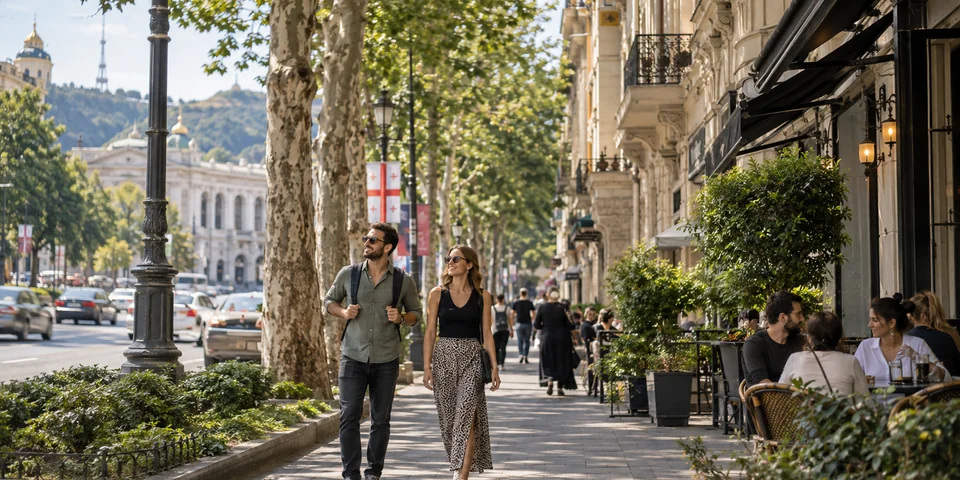
In brief: Georgia ranks among the safest countries in the world for tourists. Here is a realistic look at crime, road safety, scams, hiking risks, and what to actually worry about when visiting.
Georgia consistently ranks among the top 25 safest countries in the world. Violent crime targeting tourists is extremely rare, Tbilisi feels safe to walk at all hours, and most visitors leave without experiencing a single safety issue. But "safe" does not mean "nothing to think about." There are real risks worth understanding, particularly around road travel, and a few scams that catch unprepared visitors off guard.
Here is an honest breakdown of safety in Georgia, based on data, official travel advisories, and practical experience on the ground.
What the Data Says
Georgia ranks 21st globally on the Numbeo Crime Index for safety. Tbilisi places 49th out of 380 cities on the Safety Index by City. The World Travel Index ranks Georgia 26th globally for offering safe travel conditions. The Gallup Law and Order Index gives Georgia a score of 86 out of 100, placing it among the top 35 safest countries out of 140 surveyed.
National crime statistics show a multi-year downward trend in total recorded crimes. No major government travel advisory advises against travel to Georgia as a whole. The UK Foreign, Commonwealth & Development Office states: "Most visits to Georgia are trouble-free." The U.S. Department of State assigns Georgia a Level 1 advisory: "Exercise normal precautions." Australia and Canada issue similar guidance, with specific notes about avoiding demonstrations and taking care on the roads.
How Georgia Compares to Popular Destinations
For context, Georgia's crime rates sit well below most Western European capitals. Travelers who feel comfortable in cities like Barcelona, Rome, or Athens will find Tbilisi noticeably safer in terms of petty crime. The local car rental market is well established, with experienced operators offering personalized service and on-the-ground support across the country.
Petty Crime: Very Low
Pickpocketing and theft targeting tourists are uncommon in Georgia. In Tbilisi, it is common to see locals leave bags unattended at cafes or hand wallets to strangers to swipe transit cards. There is a baseline level of social trust that surprises many visitors.
That said, common sense still applies. Keep an eye on belongings in crowded areas, especially in tourist zones and on public transport. In summer, there are occasional bag-snatching incidents near bars late at night. Lock your accommodation doors and windows.
Tourist Scams: Limited but Real
Taxi Overcharging
Taxis in Georgia do not have meters, which opens the door to inflated fares. This is the most common way tourists overpay. The solution is simple: always use the Bolt app for transparent, cashless rides. Never accept a taxi from drivers soliciting inside airport terminals at Tbilisi Airport or Kutaisi Airport.
The Bar Scam
A well-documented scam in Tbilisi and Batumi works like this: a stranger (often met through a dating app) invites you for drinks at a specific venue. After a few rounds, the bill arrives with several extra zeros. Victims are sometimes escorted to an ATM. Police are cracking down on these operations, and they are less common than they were a few years ago. The simplest protection: never go to a bar that does not appear on Google Maps or has no reviews. Choose the venue yourself.
Currency Exchange
Some exchange kiosks offer unfavorable rates or shortchange tourists. Use ATMs instead. Basisbank and CartuBank ATMs have no withdrawal fees and higher limits.
Road Safety: Your Biggest Real Risk
Road travel is, without question, the most significant safety concern for visitors to Georgia. Road fatalities rose approximately 20% in 2025. The risk is not limited to mountain passes. Everyday city driving and intercity highways see aggressive overtaking, speeding, and inconsistent adherence to traffic rules.
Marshrutka minivans are cheap but drivers often speed under competitive pressure. If budget allows, use a reputable private driver for longer journeys, or better yet, rent a car and drive yourself so you control the pace and can pull over when conditions feel unsafe.
Road Safety Tips
- Never drive after dark on mountain roads
- Always wear a seatbelt, front and back
- Add 20 to 30 percent to Google Maps drive times
- Never get into a vehicle if you suspect the driver has been drinking
- Limit driving sessions to 3 to 4 hours
- For mountain routes like Tusheti or Svaneti, use a proper 4x4 vehicle
As a pedestrian, never assume cars will stop at crossings. Use underground passages where available, especially in Tbilisi.
Outdoor Safety: Hiking and Adventure
Georgia's mountain regions offer spectacular hiking, but trail information can be limited and conditions change quickly. Marked trails are improving thanks to the Transcaucasian Trail project, but some routes remain poorly signposted and unsuitable for inexperienced hikers.
Solo hikers should exercise extra caution, especially in remote areas. Shepherd dogs in mountain regions are working animals bred to protect livestock and can be aggressive toward strangers on foot. If you encounter them, walk calmly and purposefully rather than running.
For adventure activities like paragliding, new safety standards have been introduced, but this remains an area where cutting corners can be dangerous. Make sure your travel insurance covers high-risk activities if you plan on skiing at Gudauri or trekking above 3,000 meters.
Protests and Political Context
Public demonstrations have been a regular feature of Georgian life for years. Recent protests have been concentrated along Rustaveli Avenue in Tbilisi, primarily in the evenings. Outside this specific area, daily life continues as normal.
For visitors, the practical advice is straightforward: avoid demonstration areas after dark, stay informed through local news, and follow your government's travel advisory. Protests are generally peaceful and well-contained. Businesses, restaurants, and tourist attractions operate as normal throughout.
There is no anti-foreign sentiment tied to these events. Tourists are actively welcomed. Tourism is a vital part of Georgia's economy, and most Georgians want visitors to keep coming.
Solo Female Travel
Georgia is generally safe for solo female travelers. Most women travel independently without incident. However, Georgia is a patriarchal society, and unwanted attention from men can occur, particularly in more traditional or rural areas. Practical steps that help: avoid walking alone late at night, dress conservatively in rural settings, pair up with other travelers for remote mountain hikes, and make sure your accommodation has a secure lock.
Traveling with Children
Georgia is very family-friendly. Children are adored in Georgian culture, and you will receive warm treatment at restaurants and guesthouses. The main thing to watch for is the lack of safety railings at historical sites like Vardzia, Uplistsikhe, and Narikala Fortress. Some heritage sites involve significant climbing on uneven surfaces.
Food and Water Safety
Food hygiene in Georgia is generally good. Ingredients are fresh and cooking relies on simple, seasonal produce. Food poisoning is uncommon. Tap water in most of Georgia is safe to drink, though in Tbilisi the high mineral content from aging pipes does not agree with everyone. Start with small amounts or stick to bottled water if uncertain.
Abkhazia and South Ossetia
These separatist regions cannot be legally entered from Georgian-controlled territory. Most travel insurance does not cover them, and no consular assistance is available inside. Avoid them entirely. This does not affect travel anywhere else in the country. Popular destinations near the administrative boundary lines, including Gudauri, Racha, and the main east-west highway through Gori, are fully accessible and safe.
Emergency Numbers
- 112: General emergency (police, fire, ambulance)
- Download the 112 Georgia app to contact emergency services and share your GPS location
The Bottom Line
Georgia is an overwhelmingly safe destination. The main thing to take seriously is road safety. Beyond that, use the same common sense you would anywhere: use taxi apps, avoid bars without reviews, keep an eye on your belongings, and stay away from demonstrations. For everything else you need to know before your trip, see our first-time visitor guide, our insurance guide, and our seasonal planning guide. Browse our full fleet to find the right car for your Georgia trip.
Sources
These official sources support the practical details in this guide. Recheck live schedules, prices, opening hours, and road conditions before you travel.
- Roads Department of Georgia restrictions - official road restriction and closure notices for mountain and highway routes.
- Georgia Travel official destination guide - official country destination context for regions, cities, culture, and parks.
- National Parks of Georgia - official visitor information for protected areas and national parks.