
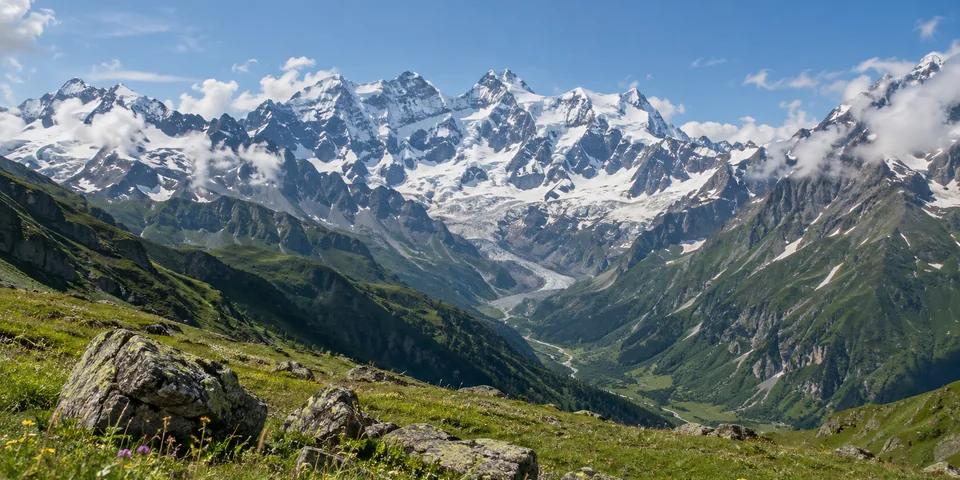
In brief: A practical comparison of Kazbegi, Svaneti, Tusheti, Khevsureti, Racha, Upper Adjara, and Guria's highlands. Scenery, accessibility, hiking, food, infrastructure, and what kind of traveler each region suits.
Georgia's mountain regions are not interchangeable. Kazbegi is easy to reach, Svaneti is a road-trip commitment, Tusheti is remote, and Racha, Adjara, Khevsureti, and Guria suit slower travel. Choosing between them shapes the whole trip.
Kazbegi: Best for Easy Access and Soft Adventure
Under three hours from Tbilisi on a fully paved road, Kazbegi is the most accessible mountain destination in Georgia. The drive north along the Georgian Military Highway is half the experience, passing Ananuri Fortress on the reservoir, climbing through Gudauri ski resort, and cresting the Jvari Pass at 2,395 meters before dropping into the Terek River gorge.
The town of Stepantsminda sits at 1,700 meters with Mount Kazbek (5,054m) and the iconic Gergeti Trinity Church providing the backdrop. Half a dozen day hikes radiate from town: the climb to Gergeti Church (extendable to the glacier), the Juta Valley trail beneath the Chaukhi Massif, the Truso Valley with its travertine formations, and the quieter Sioni Valley.
Infrastructure: Boutique hotels (Rooms Kazbegi), dozens of guesthouses, excellent restaurants specializing in mountain khinkali and khabizgina (potato-cheese pie). Supermarkets, pharmacies, good cell coverage. ATMs are limited so bring cash.
Best for: First-time visitors, families, anyone wanting mountain scenery without committing to multiple days. Works as a 2-3 night trip from Tbilisi.
Season: Hiking is typically most practical from May through October. Peak months are July-August. September-October bring autumn colors and fewer crowds. The road is generally maintained through the year, but temporary restrictions can occur, especially in winter; check current official status before departure.
Getting there: Any car handles the main highway. Side valleys to trailheads require high clearance. Our 4x4 rentals handle everything comfortably.
Svaneti: Best for Hiking and Road Trips
Located in the western Greater Caucasus about five hours from Kutaisi, Svaneti is Georgia's premier hiking destination and arguably its most visually spectacular mountain region. The medieval defensive towers that define Mestia and the UNESCO-listed village of Ushguli are unlike anything else in the Caucasus.
The four-day Mestia to Ushguli trek is the most popular multi-day hike in Georgia. Day hikes include Koruldi Lakes, Chalaadi Glacier, and Chkhuti Ridge. The Svaneti Museum in Mestia is excellent, and the town itself is pleasant enough to spend a full day just walking the cobbled streets of the Laghami Old Quarter.
Infrastructure: Well-established food scene in Mestia with specialty coffee shops and cocktail bars. Hotels, guesthouses, and self-contained apartments. Two ski resorts (Hatsvali and Tetnuldi) operate in winter. No ATMs in Ushguli so bring cash from Mestia. Power outages more common than other regions.
Best for: Serious hikers, road trippers, cultural travelers. Needs 3-5 nights minimum to justify the travel time.
Season: July-August peak. September less crowded with autumn colors emerging. Cultural festivals include Kvirikoba in late July.
Getting there: Routes approach through Zugdidi (reaching Mestia first) or through Lentekhi (reaching Ushguli first). Access is seasonal and condition-dependent, particularly around high passes. Check current official road status and rental terms, then choose a suitable vehicle. The full Zugdidi-Mestia-Ushguli-Lentekhi-Kutaisi loop can form a memorable road trip when conditions permit.
Tusheti: Best for Wild Scenery and Total Seclusion
Open for only a short summer window and accessed via the infamous Abano Pass, Tusheti is Georgia's most remote mountain region. Home to Europe's highest continuously inhabited village (Bochorna, 2,345m), the protected landscapes contain the most isolated settlements in the Greater Caucasus.
The drive itself is almost the highlight: a narrow, zigzagging road cut into cliff faces that demands a professional driver and proper 4x4. Once in Omalo (1,880m) and the higher villages, you feel completely enveloped by mountains. The scale of the valleys gives Tusheti an aura that is difficult to describe.
Most hikes here are 2-5 day treks among the most challenging routes in Georgia. Non-hiking options are limited: Keselo Fortress above Omalo, the reconstructed stone village of Dartlo, and simply settling into guesthouse life with Tush cuisine, herbal tea, and local non-alcoholic beer.
Infrastructure: Very limited. No grocery stores, pharmacies, ATMs, or restaurants. Eat at your guesthouse. Power outages and water cuts happen. Bring everything you might need. Large sections of the Abano Pass are cellular dead zones.
Best for: Experienced travelers seeking genuine remoteness and bragging rights. Not for families or anyone uncomfortable with basic conditions. Needs 4-5 nights minimum to justify the long drive.
Season: Mid-June through end of September. July-August safest for travel. August brings cultural festivals with horse races in different villages almost every weekend.
Getting there: Self-driving is only recommended for very experienced off-roaders. A shared Delica taxi or private driver is the standard approach. Our 4x4 fleet is equipped for the pass if you are confident.
Khevsureti: Best for History and Authenticity
Sitting geographically between Kazbegi and Tusheti, Khevsureti strikes a balance between the two. Improved roads make it relatively accessible (four hours from Tbilisi to Shatili), yet it still has a remote, untouched feel. The fortified villages of Shatili and Mutso, burial crypts, and folk legends give the region a poetic, mystical quality that I have not experienced with such intensity anywhere else in Georgia.
The main day hike is to the Abudelauri Lakes beneath Mount Chaukhi, a scenic mid-level trail also doable as a through-hike from Juta in Kazbegi. Multi-day routes link Khevsureti with Tusheti and Kazbegi. Cultural highlights include the Anatori crypts and the famous khinkali restaurants in Pshavi on the drive in.
Infrastructure: Small markets, a handful of guesthouses in Shatili (some inside or overlooking the fortified towers), a couple of cafes. No ATMs. Good cell coverage around Shatili with dead zones on the road.
Best for: History lovers, photographers, hikers wanting authentic atmosphere without Tusheti's extreme logistics. Three days is plenty of time, making it efficient to combine with Kazbegi.
Season: Late May through end of November. Road prone to flooding in May-June. July-August best for hiking. September-October for autumn colors.
Getting there: Road is sealed to Roshka, gravel beyond the Datvisjvari Pass. Manageable for confident mountain drivers. Less extreme than Tusheti.
Racha-Lechkhumi: Best for Gastronomy and Slow Travel
Popular with Georgians but still under the radar internationally, Racha-Lechkhumi is a classic summer escape just 2.5 hours from Kutaisi. What Kazbegi is to Tbilisi, Racha is to Kutaisi: an easy mountain weekend. The lowland scenery ranges from Christmas tree forests to impressive limestone cliffs, and while not as visually dramatic as Svaneti or Kazbegi, this is still the Greater Caucasus.
The region is better known for glamping, wineries, and gastronomy than for hardcore hiking. Day hikes include the Khvamli Mountain summit and the Sairme Pillars, both entry-level and well-marked. Upper Racha's alpine villages of Gona and Ghebi offer gorgeous highland vistas. Family cellars produce Khvanchkara (the most famous wine from this region), and Rachan cuisine includes lori cured ham and shkmeruli garlic chicken.
Infrastructure: Supermarkets, banks, ATMs in Ambrolauri, Oni, and Tsageri. Good cell coverage. Accommodations range from guesthouses to geodesic glamping domes. Many businesses close outside June-October.
Best for: Foodies, wine lovers, couples seeking a relaxed pace. Pairs naturally with Kutaisi and western Georgia. Works as 2-3 nights.
Season: Very seasonal. June-October for most businesses. Upper Racha roads close as early as end of September. Late October for peak autumn foliage in the lowlands.
Getting there: Sealed roads throughout, suitable for any car. Minimal public transport means a rental car is essential.
Upper Adjara: Best for Cultural Diversity
Rising behind Batumi along the Turkish border, the Adjaran highlands are one of the most underrated mountain areas in Georgia. Sublime scenery, summer pastures (yaylas), and painted wooden mosques characterize this culturally distinct corner of the Lesser Caucasus.
Sealed roads, glamping sites, and activities including one of Europe's longest zip lines make Upper Adjara more accessible than regions like Tusheti. The partly unpaved Batumi-Akhaltsikhe road traverses the entire region and can be combined with a loop through Samtskhe-Javakheti.
Best for: Travelers wanting mountain atmosphere with Black Sea coast proximity. Naturally pairs with Batumi for a mixed itinerary.
Guria's Highlands: Bakhmaro and Gomismta
Two highland areas in little-visited Guria where tourism is genuinely underdeveloped. A-frame cottages, mineral water springs, and vast forests characterize both peaks. The sunsets are legendary: weather rolling in off the Black Sea creates a phenomenon where valleys flood with clouds. The Bakhmaro Horse Cup in August is a thrilling event.
Best for: Travelers seeking total solitude and natural beauty without marked trails or tourist infrastructure.
How to Choose: Quick Decision Guide
- Short on time (2-3 nights): Kazbegi or Khevsureti from Tbilisi, Racha from Kutaisi
- Serious hiking (4-7 nights): Svaneti (Mestia-Ushguli trek) or Tusheti
- Food and wine focus: Racha-Lechkhumi
- History and photography: Khevsureti
- Maximum remoteness: Tusheti or Vashlovani
- Families or first-timers: Kazbegi
- Road trip loop: Svaneti (Zugdidi-Mestia-Ushguli-Lentekhi-Kutaisi)
- Combined with coast: Upper Adjara or Guria highlands plus Batumi
Every region on this list is best reached with your own vehicle. Public transport covers Kazbegi and Svaneti but does not reach trailheads, wine cellars, or highland villages. For paved routes, any rental car works. For Tusheti, Khevsureti, Upper Racha, and Vashlovani, our 4x4 fleet handles everything.
For more planning, see our seasonal guide, driving tips, 30 destinations by region, road trip guide, and packing list.
Sources
These official sources support the practical details in this guide. Recheck live schedules, prices, opening hours, and road conditions before you travel.
- Roads Department of Georgia restrictions - official road restriction and closure notices for mountain and highway routes.
- Georgia Travel official destination guide - official country destination context for regions, cities, culture, and parks.
- National Parks of Georgia - official visitor information for protected areas and national parks.
- UNESCO World Heritage Centre - official heritage-site listings and conservation context.