
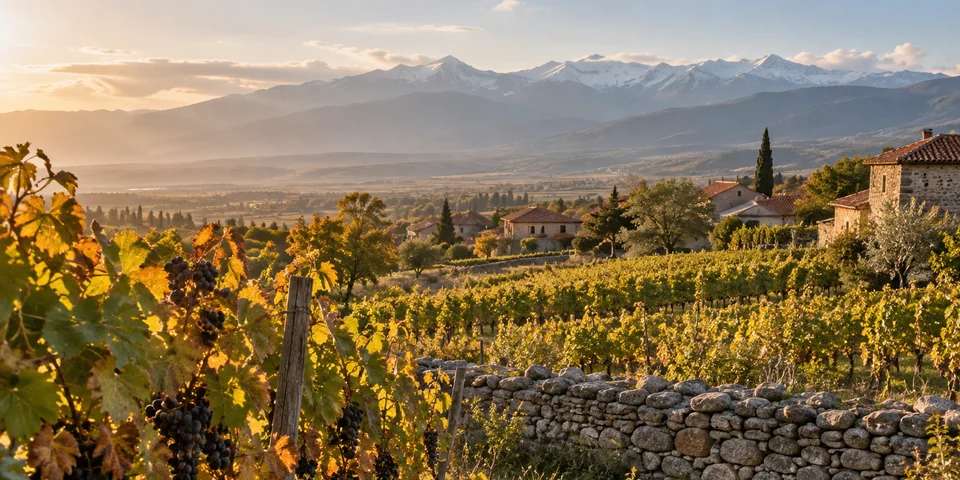
In brief: Georgia changes fast by elevation and season, from spring wine trips and summer high passes to autumn harvests and winter ski roads.
One of the most common questions we get from customers is: "When is the best time to visit Georgia?" The honest answer is that there is no single perfect time. Georgia has around 37 different microclimates packed into a tiny country, so the weather in Tbilisi can be completely different from what you will find in the mountains or on the Black Sea coast.
Every season has strengths and trade-offs. Use the month-by-month notes below to choose between spring wine trips, summer high passes, autumn harvests, winter ski roads, and city days that do not depend on perfect weather.
The Short Answer
For most travelers, late September through early November and late April through May offer the best overall balance. These shoulder seasons bring comfortable temperatures, fewer crowds, lower prices, and enough road access to explore most of the country.
But if you are after specific experiences like alpine hiking, skiing, wine harvest, or beach time, read on for the detailed breakdown.
Spring in Georgia (Mid-March to Early June)
Best for: Wildflowers, wine festivals, Orthodox Easter traditions, and low-altitude hiking.
Spring arrives unevenly across Georgia. March can still be cold and windy, especially in the east. By April, cherry and plum blossoms appear in Tbilisi, and the countryside starts turning green. May is warm, lush, and generally the most pleasant spring month, though it is also the wettest.
What you can do in spring:
- Explore Tbilisi and Kutaisi in comfortable weather without summer crowds
- Visit Kakheti wine region when vintners open their clay qvevri vessels for the first taste of last year's harvest
- Hike at lower elevations in Borjomi-Kharagauli and Lagodekhi national parks
- Experience Georgian Orthodox Easter traditions (dates vary each year)
- Attend the New Wine Festival in Tbilisi (May)
- Drive through Vashlovani's semi-desert landscapes, which are at their best in spring
What to keep in mind:
- Most high mountain roads (Tusheti, Khevsureti, Svaneti passes) are still closed until June
- Rain is common, especially in western Georgia. Pack layers and a waterproof jacket
- The Black Sea coast tends to be grey and wet in spring. Not ideal for beach time
Best car for spring: Any sedan or SUV handles spring roads well. A Hyundai Tucson is perfect for paved routes.
Summer in Georgia (Mid-June to Early September)
Best for: Alpine hiking, remote mountain regions, summer festivals, and road trips.
Summer is hot. In Tbilisi and the lowlands, temperatures regularly hit 40°C, and the city can feel oppressive. It also typically offers the broadest access to Georgia's mountain regions, although weather, maintenance, and official restrictions can still close individual routes.
What you can do in summer:
- Consider Tusheti over the Abano Pass during its typical summer access window, subject to current conditions and official restrictions
- Explore Svaneti and drive the Zagari Pass from Ushguli to Kutaisi
- Hike around Kazbegi, Juta Valley, and the Chaukhi Massif
- Visit Khevsureti and the fortress village of Shatili
- Experience traditional horse races and mountain festivals
- Take advantage of 15+ hours of daylight for long road trips
What to keep in mind:
- Tbilisi is uncomfortably hot in July and August. Most locals leave the city
- The Black Sea coast (especially Batumi) is packed in July-August with gridlocked traffic
- Popular hotels and trains book out fast. Reserve your rental car well in advance
- Afternoon thunderstorms are common in the mountains
Vehicle fit for summer: A Jeep Wrangler or Toyota 4Runner may suit eligible mountain routes. Summer often brings wider access, but check the Roads Department of Georgia before each mountain leg and confirm that the vehicle is suitable for current conditions.
Autumn in Georgia (Mid-September to Early November)
Best for: Wine harvest (Rtveli), fall foliage, the Black Sea coast, cultural events, and overall the most balanced travel experience.
Autumn is widely considered the best season to visit Georgia, and we agree. September still feels like summer in the lowlands, with warm days and cool nights. By October, the mountains and forests explode with red, orange, and gold foliage. The entire country has a festive energy thanks to the grape harvest.
What you can do in autumn:
- Join the Rtveli wine harvest in Kakheti (late August through September) or in western Georgia (late October to early November)
- See spectacular fall colors in Racha, Svaneti, and the national parks
- Visit Batumi during "Velvet Season" (mid-September to early October) when beaches are calm and water is still warm
- Attend the Tbilisoba festival in Tbilisi (October)
- Hike most mountain trails, which stay open through September and into early October
- Drive the scenic Tianeti backroad between Kakheti and Kazbegi through autumn forests
What to keep in mind:
- High mountain passes start closing by late October
- Days get noticeably shorter. Plan driving accordingly
- Sudden cold snaps can occur, especially at higher elevations
Best car for autumn: Any car works for most autumn routes. For wine country, a comfortable sedan is ideal. For mountain foliage drives, consider an SUV from Kutaisi.
Winter in Georgia (Mid-November to Early March)
Best for: Skiing, snow landscapes, Christmas and New Year traditions, and quiet city breaks.
Winter is underrated. Georgia has four ski resorts (Gudauri, Bakuriani, Goderdzi, and Tetnuldi in Svaneti) that are rapidly developing and offer great value compared to European alternatives. The cities are quieter, prices drop, and the food scene is at its coziest.
What you can do in winter:
- Ski at Gudauri or Bakuriani (season runs late December through March/April)
- Experience Georgian New Year celebrations (December 31 is the biggest night of the year)
- Celebrate Orthodox Christmas (January 7) with traditional rituals
- Enjoy Tbilisi as a winter city break with wine bars, sulfur baths, and cozy restaurants
- Drive through the stark, beautiful winter landscapes of Kakheti's vineyards
What to keep in mind:
- Most high mountain roads are closed. Tusheti, Khevsureti, and high passes are inaccessible
- Even major roads like Gudauri to Kazbegi can close temporarily during storms
- Winter tires are mandatory on some mountain roads from December 1 to March 1
- Days are short (around 9 hours of daylight in December)
- Build buffer days into your itinerary in case of weather disruptions
Best car for winter: A 4x4 with winter tires is essential for mountain roads. For city-based winter trips, any car works fine.
Month-by-Month Quick Reference
- January: Quiet cities, Orthodox traditions, early ski season. Cold but atmospheric.
- February: Peak ski season with reliable snow. Cities can feel grey.
- March: Unpredictable weather, end of ski season. Spring is starting but not quite there.
- April: Cherry blossoms in Tbilisi, Orthodox Easter, fast-changing weather.
- May: Wine festivals, mild temperatures, lush green landscapes. Wettest month.
- June: Early summer sweet spot. Mountain passes open, wildflowers bloom, fewer crowds than July.
- July: Peak heat in the lowlands. Mountains are the escape. Very busy everywhere.
- August: Hottest month. Mountain festivals, afternoon thunderstorms, coast is packed.
- September: Standout month. Wine harvest, ideal hiking, Velvet Season on the coast.
- October: Autumn colors, Tbilisoba festival, transhumance traditions. Our favorite month.
- November: Late fall colors in the lowlands. Cultural events, opera, and theater season.
- December: Short days, winter light, New Year celebrations. Ski season begins.
Planning Your Trip Around the Seasons
No matter when you visit, having a rental car gives you the flexibility to chase the best weather and avoid the crowds. In summer, skip the hot cities and head to the mountains. In autumn, follow the harvest from east to west. In winter, pair a city break with a ski trip.
We deliver cars free to Tbilisi Airport, Kutaisi Airport, Batumi Airport, and Yerevan Airport. Full off-road insurance options, roof tents, camping equipment, no deposit, unlimited mileage, and From EUR 49/day year-round.
For more practical tips, read our complete guide to driving in Georgia. And if you want less-traveled inspiration, check out our list of 15 hidden places most tourists never visit.
Sources
These official sources support the practical details in this guide. Recheck live schedules, prices, opening hours, and road conditions before you travel.
- Roads Department of Georgia restrictions - official road restriction and closure notices for mountain and highway routes.
- Georgia Travel official destination guide - official country destination context for regions, cities, culture, and parks.
- National Parks of Georgia - official visitor information for protected areas and national parks.