
In brief: The essentials about reaching Tusheti via the Abano Pass, the safest transport options, 4×4 requirements, road conditions, costs, and when the road opens.
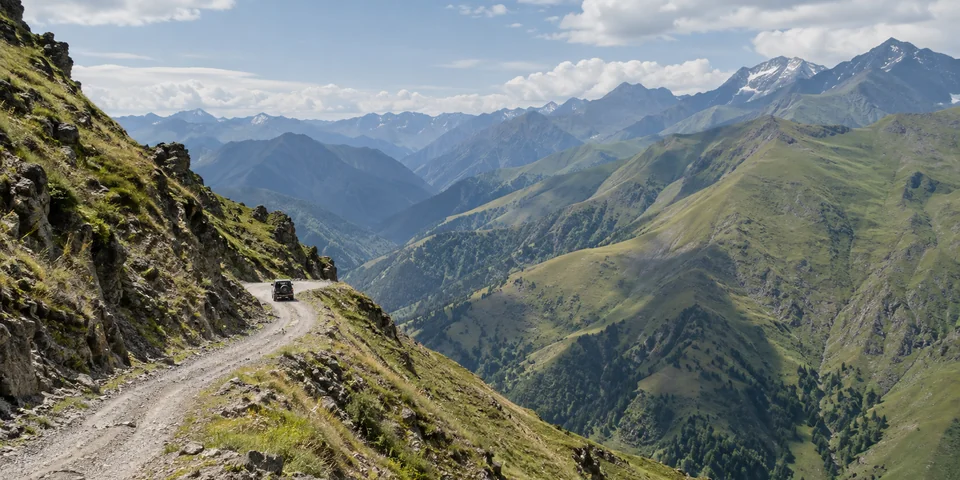
Tusheti is Georgia's most remote and spectacular mountain region, a protected landscape of medieval tower villages, alpine meadows, and Caucasus peaks accessible only via the notorious Abano Pass, one of the world's most dangerous roads. Getting there is half the adventure, but it demands serious preparation.
Below are the transport options from Tbilisi to Omalo, the main settlement in Tusheti, with 2026 road conditions, costs, safety advice, and scenic stops along the way.
Key Facts About the Tusheti Road
- The road is seasonal: The Abano Pass typically opens in early June and closes by mid-September. Outside this window, snow and ice make the road impassable.
- Distance: Tbilisi to Omalo is approximately 190 km. Kvemo Alvani (the last lowland town) to Omalo is 77 km.
- Drive time: 5.5-6 hours total from Tbilisi, including 2-2.5 hours to reach Kakheti via the Gombori Pass, plus 3.5-4 hours on the mountain road to Omalo.
- The Abano Pass reaches 2,826 metres (9,272 feet). The road is narrow, unsealed, and flanked by sheer drop-offs with no barriers.
- A 4×4 is mandatory. No sedans, no Priuses, no exceptions. You need a vehicle with high clearance, strong tyres, and ideally low-range gearing.
- Road improvement works (a 100-million-GEL project) have widened and levelled sections, with full completion expected by 2026-2027.
- No mobile signal for much of the journey. Carry extra fuel, water, and a first-aid kit.
The Safest Way to Reach Tusheti
Road safety in Tusheti is a serious concern, fatal accidents occur every summer. The single most important decision you make is choosing the right driver. We strongly recommend travelling with a professional, experienced driver who has been specifically referred to you or vetted by a reputable platform.
Options ranked by safety and convenience:
- Private transfer with a vetted driver, the safest and most comfortable option
- Organised multi-day tour, safety in numbers with an experienced operator
- Shared 4×4 taxi from Alvani, budget-friendly but less control over driver quality
- Self-driving, only for experienced off-road drivers (see below)
Option 1: Private Driver from Tbilisi or Telavi
The easiest way to reach Tusheti. A private driver picks you up from Tbilisi, Telavi, or Alvani and delivers you to your guesthouse in Omalo. Prices for a one-way transfer start from approximately 500-650 GEL per car from Alvani, or higher from Tbilisi.
We recommend departing from Telavi or Alvani rather than Tbilisi to reduce the total drive time. Spend a night in Kakheti first, Telavi has excellent guesthouses and wineries to explore.
Your guesthouse in Omalo can usually arrange a trusted driver for your return trip. See our private driver guide for more tips.
Option 2: Marshrutka + Shared 4×4 Taxi
The budget option. No marshrutka goes all the way to Tusheti, you travel in two stages.
Stage 1: Tbilisi to Kvemo Alvani
Vans depart from Ortachala Central Bus Station at approximately 9:10am, 1:40pm, and 4pm. Fare: 12-15 GEL. Journey time: ~2 hours via the Gombori Pass. Take the first van if continuing to Tusheti the same day.
Alternatively, shared taxis from outside Isani Metro Station cost ~20 GEL per person and are slightly faster. Vans to Telavi are more frequent (every 30-60 minutes, 8:20am-5pm, 12-15 GEL), from Telavi, a local taxi to Alvani takes 30 minutes (~10 GEL). See our marshrutka guide.
Stage 2: Kvemo Alvani to Omalo
Shared 4×4 taxis gather at the main junction in Kvemo Alvani, timing departures to arriving marshrutkas, typically from 11am, with the last taxis leaving by 2-3pm. Arrive by 11:30am at the latest.
Prices (2026 season):
- Whole car (7-seater): 500-650 GEL
- Per seat in a shared car: 100-120 GEL
These are one-way fares. In early/late season you may negotiate down to 70 GEL per seat. Alvani has the last ATM before Tusheti, withdraw cash here.
Option 3: Organised Tour
Several operators run multi-day group tours to Tusheti throughout summer (mid-June to mid-September). This is ideal for solo travellers wanting to share transport costs and travel with a guide. Tours typically run 3 days and include transfers, accommodation, and guided hikes.
Check our Georgia first-time tips for more advice on booking tours.
Should You Drive Yourself to Tusheti?
We do not recommend self-driving to Tusheti unless you have extensive experience with off-road mountain driving. The road has no phone signal, no fuel stations, no barriers on cliff edges, and requires navigating blind switchbacks that sometimes demand reversing.
If you do choose to self-drive, you need:
- A proper 4×4 with high clearance, Delica, Jeep Wrangler, or similar
- Extra fuel (no stations in Tusheti)
- A first-aid kit and basic mechanical knowledge
- Experience with unpaved mountain roads
The Abano Pass requires a capable 4×4 and extensive mountain-driving experience. our 4×4 rental terms remain subject to our rental-length, weather, safety, and vehicle-suitability rules, but you must check the official road status, weather, and local warnings and never drive when the road is closed or unsafe.
For general driving advice, see our Georgia driving guide.
Scenic Stops on the Way to Omalo
- Alvani: The lowland home of many Tushetian families. Visit wool-processing workshops and felt-craft studios. Stock up on supplies at the last shops before the mountains.
- The Big Waterfall: About an hour into the mountain drive, a massive cascading waterfall crosses the road. One of the few concreted sections, safe to stop for photos.
- Torghva Bath: A natural hot spring bathhouse off the road near Chkhatana. Entry ~10 GEL. A welcome soak before or after the pass.
- Abano Pass (2,826m): The highest point. A flat parking area offers trails to viewpoints on both sides. Budget 30+ minutes here, the panorama is extraordinary.
- Khiso Green Lake: A small lake formed when part of the road collapsed. You can swim.
- Rangers' Hut & Visitors Centre: In Lower Omalo, pick up trail maps (~7 GEL) and learn about the National Park's flora and fauna.
Getting Around Inside Tusheti
There is no public transport within Tusheti. If you don't have your own vehicle, arrange taxi transfers between villages through your guesthouse. Popular destinations include Dartlo, Diklo, and Jvarboseli. Note that inter-village roads can be even more challenging than the Abano Pass itself.
Hiking between villages is the best way to experience Tusheti's landscape. The Visitors Centre in Omalo sells trail maps.
The Return Trip: Omalo to Tbilisi
Reverse the process: shared or private taxi to Kvemo Alvani (same prices as the trip up), then marshrutka or shared taxi to Tbilisi. Your guesthouse in Omalo can arrange a driver. Most taxis depart in the morning.
From Alvani, direct vans to Tbilisi run at least 3 times daily (including one at 2pm). Alternatively, taxi to Telavi (30 min, ~20 GEL) and catch one of the frequent Telavi-Tbilisi marshrutkas. See our Kakheti transport guide.
Alternative Routes to Tusheti
- Shatili-Omalo Trek: A 5-day marked hiking trail from Khevsureti via the Atsunta Pass. Requires camping gear and good fitness.
- Horseback from Pankisi Valley: A ~5-day guided horse trek through the mountains. Arrange through local guesthouses in Pankisi.
- Transhumance (late May): Some tour operators offer guided experiences following shepherds and their flocks up to summer pastures via ancient mountain paths.
Pros and cons
Rental car or self-drive
- Pros: Best for flexible timing, scenic stops, luggage, and routes that continue beyond one town or viewpoint. Groups can share the daily cost instead of paying per seat on every transfer.
- Cons: One traveler needs to manage navigation, parking, fuel, and local road conditions. It is less useful if the whole day stays inside a walkable city center.
Private transfer or driver
- Pros: Door-to-door service is easier with luggage, children, late arrivals, or a one-way route. The driver handles navigation while you keep control over planned stops.
- Cons: It costs more than shared transport. After dropoff, you may still need a separate transport plan at the destination.
Sources
These official sources support the practical details in this guide. Recheck live schedules, prices, opening hours, and road conditions before you travel.
- Tbilisi Transport Company standard tariff - official Tbilisi metro, bus, minibus, and ropeway fare rules.
- Roads Department of Georgia restrictions - official road restriction and closure notices for mountain and highway routes.
- Georgia Travel official destination guide - official country destination context for regions, cities, culture, and parks.