
In brief: Compare the 2026 train, coach, marshrutka, rental car, and private transfer options between Kutaisi and Tbilisi by time, cost, and convenience.
The 213-kilometre journey between Kutaisi and Tbilisi is one of the most frequently travelled routes in Georgia. Whether you are flying into David the Builder Kutaisi International Airport or simply making your way across the country, chances are you will need to cover this east-west stretch at some point.
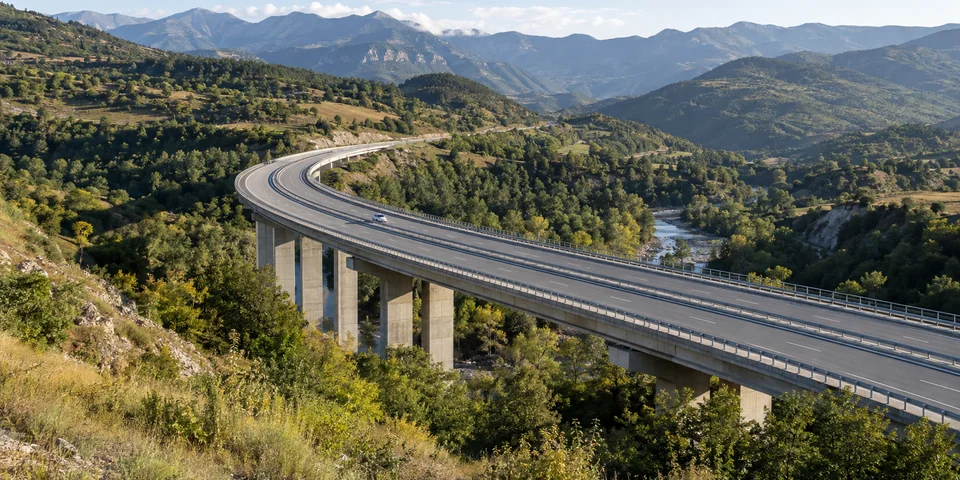
The new Rikoti Highway, completed in late 2025 with its 49 tunnels and 88 bridges, has significantly shortened road travel time. By car or bus, the trip now takes three to four hours depending on traffic. The train covers the same distance in about three and a half hours from Rioni Station.
Compare the 2026 train, coach, marshrutka, rental car, and private transfer options by time, cost, and convenience before choosing the route that fits your arrival day.
Kutaisi to Tbilisi: Options at a Glance
| Transport | Duration | Cost (2026) | Best For |
|---|---|---|---|
| Train (Rioni Station) | 3.5 hours | 14-26 GEL per person | Best overall: safe, scenic, affordable |
| Rental car | 3-3.5 hours | From EUR 49/day + fuel | Flexibility and sightseeing stops |
| Private transfer | ~3 hours | From 230 GEL per car | Speed and comfort |
| Coach bus (City Bus) | ~4 hours | 30 GEL per person | Comfortable budget option |
| Marshrutka | 4-4.5 hours | 20 GEL per person | Most frequent departures |
| Train (Airport Station) | 3.5 hours | 33-71 GEL per person | Coming directly from airport |
Option 1: Train from Rioni Station (Recommended)
The train is the best overall option for most travellers. It is safe, comfortable, scenic, and affordable. Rioni Railway Station sits on Georgia's main east-west line, about 10 kilometres south of central Kutaisi.
There are three daily trains to Tbilisi from Rioni. A morning service departing around 9am, a midday train, and an evening departure around 7:30pm. These trains originate in Poti, Ozurgeti, and Zugdidi respectively, stopping at Rioni on their way east.
Travel time is 3.5 hours. Second class costs 14 GEL per person. First class at 26 GEL is worth the upgrade for extra leg room and power sockets. Business class is available on the Poti and Zugdidi trains.
Buying Tickets
Use the Georgian Railway website (gr.com.ge) to purchase tickets online. Search for Rioni as the origin and Tbilisi as the destination. International cards are accepted with a 50 tetri processing fee. Seat selection costs an additional 1 GEL. Download your PDF ticket and show it on your phone when boarding.
Sales open about three weeks in advance. During summer, buy early to guarantee a seat. For more tips, see our Georgian trains guide.
Getting to Rioni Station
From central Kutaisi, take city bus number 3 (60 tetri, departures every 30 minutes) or a taxi via the Bolt app (8 to 10 GEL). Allow extra time for morning trains as Kutaisi can have traffic.
Arriving in Tbilisi
All trains terminate at Tbilisi Central Railway Station next to Station Square Metro. The train also stops at Didube Railway Station if you need a marshrutka connection. From Central Station, take the metro (1 GEL) or a Bolt taxi (8 to 10 GEL to Freedom Square).
Alternative: Train from Kutaisi Airport Station
If you are arriving at Kutaisi Airport, you can take a Stadler double-decker train directly to Tbilisi. There are two to five daily departures taking 3.5 hours. Tickets cost 33 GEL for second class and 71 GEL for first.
However, from Kutaisi city this option is expensive. The airport station is 22 kilometres from the centre and a taxi there costs around 30 GEL, bringing your total to at least 60 GEL. The Rioni trains are cheaper and more comfortable. See our Kutaisi Airport guide for full details.
Option 2: Rent a Car and Drive
Self-driving gives you complete flexibility to stop anywhere along the E60 highway. The road is Georgia's main east-west artery, fully sealed and well maintained since the Rikoti Highway completion. Driving time is three to three and a half hours without stops.
A standard sedan is perfectly fine for this route. However, if you plan to explore side roads, visit Borjomi or the Samtskhe-Javakheti region, or continue west to Svaneti, a 4x4 is worth considering. Our Toyota 4Runner and Jeep Wrangler handle everything from highway to mountain. Browse the full 4x4 fleet.
Fuel costs for the one-way trip run around 60 to 80 GEL. There are petrol stations throughout the route. We offer pickup from Kutaisi Airport, any address in Kutaisi city, or Tbilisi. One-way rentals between cities are available.
For scenic route ideas, see our Georgia road trip itineraries.
Option 3: Private Transfer
The fastest option at around three hours, with door-to-door service starting from 230 GEL per car. Drivers are available 24/7 and can meet you at Kutaisi Airport, your hotel, or any address.
The major advantage is being able to include sightseeing stops at no extra charge since you get the driver for the full day. A multi-stop itinerary through Zestafoni, Surami, Gori, Uplistsikhe, and Mtskheta costs the same 230 GEL.
If you are continuing onward to Kazbegi or Kakheti, a private transfer lets you go directly without changing vehicles in Tbilisi.
Option 4: Coach Bus (City Bus)
City Bus operates at least three coaches daily from Kutaisi city to Tbilisi, including an early morning bus around 3am, a day service around 11am, and an evening departure around 6:30pm. These are full-size 56-seater coaches with luggage storage, comfortable seats, free WiFi, and charging sockets.
The fare is 30 GEL and travel time is about four hours including one or two rest stops. In Kutaisi, buses depart from Chavchavadze Avenue in front of Youth Park. In Tbilisi, they terminate at Ortachala Central Bus Station.
For travellers coming from Kutaisi Airport, separate airport coach services (Georgian Bus, Omnibus, Metro) depart as flights land. The fare is 25 GEL.
Option 5: Marshrutka Minivan
Marshrutkas offer the most frequent departures, leaving Kutaisi Central Bus Station every 30 minutes from 6am, with additional hourly vans from 7am. The last vans depart at 9pm, though we recommend against travelling after dark.
The fare is 20 GEL and travel time is four to four and a half hours. Vans leave early when full, so arrive 30 minutes ahead. In Kutaisi, the bus station is on the western side of the river near McDonalds and Grand Mall. In Tbilisi, vans terminate at Didube Bus Terminal.
Marshrutkas are cramped and driving can be aggressive. Shared taxis are available at the same station for 45 to 55 GEL per person if you prefer something slightly more comfortable. Read our marshrutka guide for tips.
Best Stops Between Kutaisi and Tbilisi
If you are driving or have a private transfer, these spots along the E60 highway are worth a detour:
- Zestafoni: An industrial city with impressive Soviet-era mosaics and Brutalist architecture. A popular highway rest stop for coffee and khachapuri.
- Ubisa and Shrosha: The pottery capital of western Georgia, with roadside shops selling clay pots and qvevri wine vessels.
- Surami: Famous for its hilltop fortress and nazuki sweet bread sold by roadside bakers at the Rikoti Pass turn-off.
- Gori: Home to the Stalin Museum and the ancient Uplistsikhe Cave City. Budget one to two hours for a visit. See our day trips guide.
- Mtskheta: Georgia's old capital just off the highway before Tbilisi, with UNESCO-listed Svetitskhoveli Cathedral and Jvari Monastery.
The Reverse: Tbilisi to Kutaisi
All options work in reverse with similar schedules and fares. Trains to Rioni depart from Tbilisi Central Station with at least six daily services. Marshrutkas leave from Didube Bus Terminal regularly from 7am to 8pm. Coach buses depart from Ortachala or Dighomi depending on the company.
With an Our rental car, you can pick up in Tbilisi and drop off in Kutaisi or at Kutaisi Airport.
Continuing from Kutaisi
Kutaisi is a natural hub for exploring western Georgia. With a rental car you can easily reach:
- Martvili Canyon: Stunning gorge with boat rides, about one hour north
- Okatse Canyon: Dramatic walkway suspended above a deep gorge, 45 minutes west
- Tskaltubo: Abandoned Soviet spa town, 20 minutes from Kutaisi
- Svaneti: The mountainous region of tower villages, four to five hours north. A 4x4 is essential beyond Mestia.
- Batumi: Georgia's Black Sea resort city, about four hours west
See our Kutaisi day trips guide for the full list.
Pros and cons
Rental car or self-drive
- Pros: Best for flexible timing, scenic stops, luggage, and routes that continue beyond one town or viewpoint. Groups can share the daily cost instead of paying per seat on every transfer.
- Cons: One traveler needs to manage navigation, parking, fuel, and local road conditions. It is less useful if the whole day stays inside a walkable city center.
Marshrutka, minivan, or bus
- Pros: Usually the cheapest choice for a simple point-to-point journey. Works well when the plan follows a known route and does not need extra stops.
- Cons: Schedules, luggage space, comfort, and exact arrival points are less flexible. Some services leave when full or require a station transfer.
Private transfer or driver
- Pros: Door-to-door service is easier with luggage, children, late arrivals, or a one-way route. The driver handles navigation while you keep control over planned stops.
- Cons: It costs more than shared transport. After dropoff, you may still need a separate transport plan at the destination.
Train
- Pros: A calm scheduled option when the route is served by rail. Good for travelers who prefer not to drive or negotiate with drivers.
- Cons: Rail does not reach every village, trailhead, winery, or hotel area. Station transfers and ticket availability still need to be planned.
Sources
These official sources support the practical details in this guide. Recheck live schedules, prices, opening hours, and road conditions before you travel.
- Tbilisi Transport Company standard tariff - official Tbilisi metro, bus, minibus, and ropeway fare rules.
- Georgian Railway passenger ticket portal - official train ticket search and passenger schedule checks.
- Georgia Travel official destination guide - official country destination context for regions, cities, culture, and parks.