
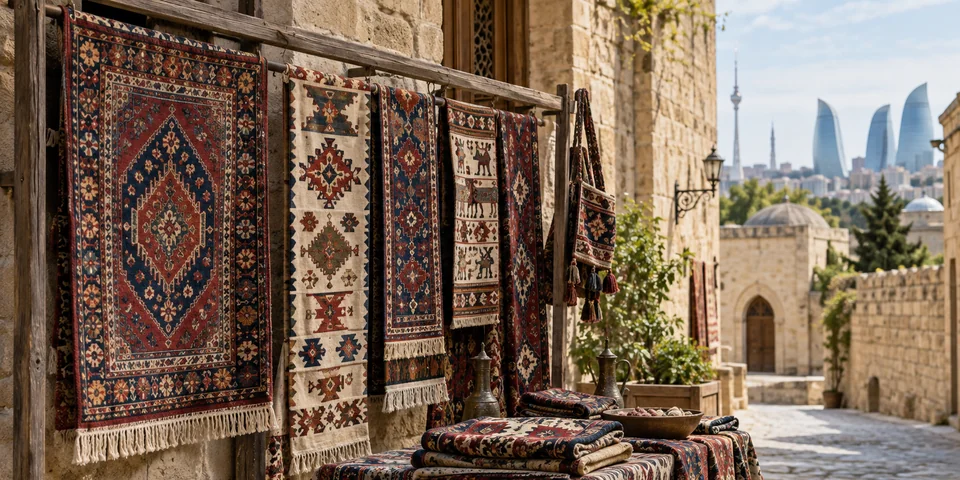
In brief: A craft-focused Caucasus guide to carpets, kilims, wool, embroidery, markets, respectful shopping, packing, customs questions, and buying with context.
Textiles in the Caucasus are not simple souvenirs. Carpets, kilims, felt, silk, embroidery, lurji supra tablecloths, and woven household objects carry family memory, regional identity, and craft knowledge. If you care about handmade things, build time for museums, workshops, and markets, not only shopping.
Good textile travel means asking better questions and leaving enough space in both your luggage and your schedule.
Azerbaijan: Carpets, Silk, and Sheki
Azerbaijan is central to Caucasus carpet culture. In Baku, the Carpet Museum gives useful context before you shop. Quba is known for carpet weaving, Lahic for copper and craft streets, and Sheki for silk history, caravanserai architecture, and patterned palace details.
When buying, ask whether a piece is handmade, where it was made, what the pattern represents, and whether documentation is needed for export.
Armenia: Rugs, Vernissage, and Workshops
Yerevan's Vernissage Market is the obvious starting point for textiles, embroidery, and handmade gifts. Carpet showrooms and workshops such as Megerian-style experiences can explain Armenian rug traditions more clearly than a quick market browse.
Be cautious with antique claims. A real old carpet should come with a clearer story and often paperwork.
Georgia: Lurji Supra, Silk, Felt, and Markets
Georgia's blue tablecloth tradition, lurji supra, is one of the most distinctive textile stories in the region. In Tbilisi, look for the State Silk Museum, folk and applied art collections, Dry Bridge Market, and small galleries that work with contemporary makers. Mountain regions also have felt, wool, and garment traditions worth seeking out.
How to Shop Respectfully
Ask before photographing vendors or workshops. Do not unfold piles of textiles carelessly. Pay fairly when buying directly from makers. If you are not buying, still treat the explanation as skilled labour, not free entertainment.
Packing and Customs
Large textiles need space and protection. Keep receipts. For older pieces, ask about export documentation before money changes hands. Do not buy anything that feels like it might be a protected antique without clear paperwork.
Route Ideas
A textile-focused Caucasus route could link Tbilisi museums and markets, Kakheti or mountain craft stops, Yerevan workshops and Vernissage, then Baku's Carpet Museum, Quba, Lahic, and Sheki. That is a proper itinerary, not a shopping afternoon.
Pros and cons
Pros
- Hands-on cultural context: Textile markets, museums, and workshops help travelers understand carpets, kilims, felt, silk, wool, embroidery, and regional craft stories beyond simple souvenir shopping.
- Support for makers: Buying directly from careful sellers or workshops can support local craft communities when you ask questions, pay fairly, and avoid rushed bargaining.
- Strong route theme: Textile travel can connect Tbilisi, Kakheti, Yerevan, Baku, Quba, Lahic, and Sheki into a more thoughtful Caucasus itinerary.
Cons
- Luggage and transport limits: Rugs and larger textiles need space, protection, and a vehicle with enough room for careful packing.
- Export questions: Older pieces may need receipts or documentation, and unclear antique claims should be treated with caution.
- Easy to overspend: Without time to compare materials, workmanship, and provenance, travelers can pay too much for pieces they do not fully understand.
Questions to Ask Sellers
Ask where the piece was made, whether it is hand-knotted or machine-made, what materials were used, whether dyes are natural or synthetic, and whether export paperwork is needed. A knowledgeable seller should be comfortable with these questions.
Transporting Purchases by Car
If textiles are a priority, choose luggage space accordingly. Keep purchases dry, away from food, and out of direct sun in a parked car. Photograph receipts and labels in case you need them at customs or when packing for a flight.
Museum First, Market Second
If you are new to Caucasus textiles, visit a museum or workshop before shopping. Seeing regional patterns, materials, and techniques first makes market conversations better and reduces the chance of buying a machine-made piece because it simply looked old.
How we can help
We can help craft-focused travelers build routes around markets, museums, workshops, and village stops while choosing a vehicle with enough luggage room for careful purchases.
Sources
These official sources support the practical details in this guide. Recheck live schedules, prices, opening hours, and road conditions before you travel.
- Georgia Travel official destination guide - official country destination context for regions, cities, culture, and parks.
- Armenia Travel official destination guide - official destination information for Armenia, including cities, culture, food, and regional travel.
- Yerevan Transport official ticketing page - official Yerevan bus, trolleybus, and metro ticket options.
- Azerbaijan Travel official destination guide - official destination information for Azerbaijan, including cities, culture, food, and regional travel.