
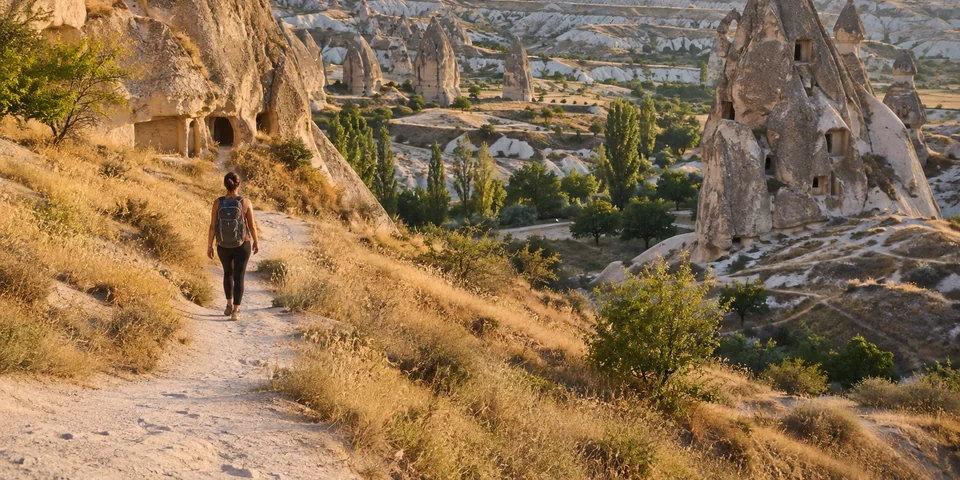
In brief: A grounded Cappadocia guide focused on valleys, cave churches, underground cities, viewpoints, village roads, and what to do even without a balloon ride.
Cappadocia is famous for hot air balloons, but the region is not a balloon-viewing platform with hotels attached. The real value is in the valleys, cave churches, underground cities, pottery towns, sunset ridges, and small roads that reveal how strange and lived-in the landscape is.
If you are driving, Cappadocia works best with two or three nights. Balloons depend on weather and wind, so plan them as a bonus, not the only reason to come.
1. Goreme Open-Air Museum
Start with the cave churches and frescoes at Goreme Open-Air Museum. Go early because tour groups arrive quickly. The site gives useful context for the rest of Cappadocia: rock-cut rooms, monastic spaces, painted interiors, and the way soft volcanic stone shaped daily life.
2. Zelve and Pasabag
Zelve Open-Air Museum and Pasabag are excellent for understanding the fairy-chimney landscape without only chasing one viewpoint. Zelve feels more spacious and exploratory; Pasabag is more iconic and busier. Pair them in one morning if you have a car.
3. Uchisar Castle and Pigeon Valley
Uchisar gives the best high view over the region. Combine it with a walk into Pigeon Valley if the weather is good. The roads around Uchisar can be steep and narrow near hotels, so park where it is easy and continue on foot.
4. Red Valley and Rose Valley
These valleys are strongest in late afternoon, when the rock colour changes quickly. You can hike sections or drive to viewpoints, but do not underestimate heat, dust, and navigation. Carry water and avoid starting a long valley walk close to sunset unless you know the route.
5. Love Valley Viewpoints
Love Valley is popular because the rock formations are instantly recognisable. The viewpoints are easy to reach, but the tracks can be rough after rain. A high-clearance vehicle is more comfortable if you plan to explore multiple valley roads.
6. Underground Cities
Derinkuyu and Kaymakli are the classic underground-city visits. They are cool, tight, and atmospheric, with low passages and steep steps. Claustrophobic travelers may prefer to skip them or visit briefly. They combine well with a southern drive toward Ihlara Valley.
7. Avanos and Pottery Workshops
Avanos sits on the Kizilirmak River and is known for pottery. It is a useful slower stop between valley viewpoints. Choose workshops that explain the process rather than only pushing sales, and leave enough time for tea.
8. Ihlara Valley
Ihlara is farther out, but it gives Cappadocia a different texture: a green canyon walk with rock-cut churches and water below. It works best as a full-day drive with Selime Monastery and an underground city, not as a rushed add-on after sunrise balloons.
Driving Notes
Cappadocia roads are generally manageable, but village lanes can be tight and unpaved viewpoint tracks vary. In winter, snow and ice are possible. In summer, heat makes midday hikes harder than they look.
Where to Base Yourself
Goreme is the easiest base for first-timers because tours, restaurants, valley access, and balloon pickups are straightforward. Uchisar is quieter and better for views. Urgup and Avanos can be calmer for drivers who prefer easier parking and less tourist density.
Driving Rhythm
Do not chase sunrise, valley hikes, underground cities, and sunset viewpoints all in one day. Cappadocia looks compact, but heat, dust, crowds, and unpaved tracks slow everything down. Plan one major morning activity, one afternoon drive, and one sunset point.
How we can help
We can help travelers connect Turkey road days with Caucasus routes, especially when deciding where a car adds freedom and where a local transfer or walking day is easier.
Sources
These official sources support the practical details in this guide. Recheck live schedules, prices, opening hours, and road conditions before you travel.
- GoTurkiye official travel guide - official destination context for Turkiye, Istanbul, Cappadocia, and regional travel; the official site may block crawlers, so verify directly when planning.