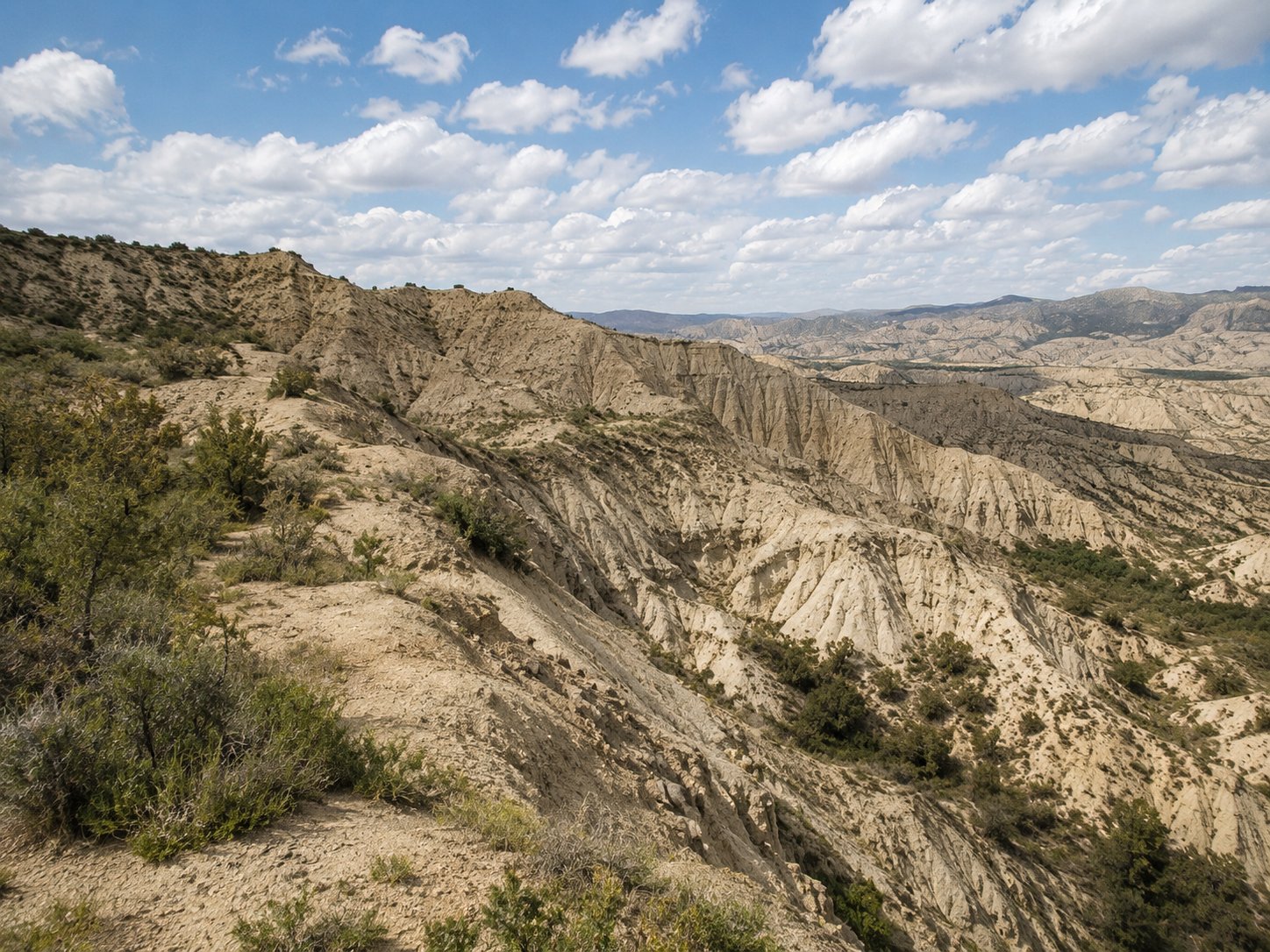
Most people who think of Georgia picture green mountains, old churches and big rivers. Vashlovani is none of that. It sits in the far south-east of the country, right on the line with Azerbaijan, and it looks more like a bit of Africa than the Caucasus. Dry hills, deep cracks in the ground, small trees that look thirsty, and very few people. We love it. Once you go, you do not forget it.
This guide is a simple plain-English walk through the trip. No fancy words. Just what you need to know so you can drive in, see the best parts, and drive out without trouble.
Where it is and why it is so weird
Vashlovani is part of Kakheti, the wine region in eastern Georgia. From Tbilisi the drive is around 170 km. The closest small town is Dedoplistskaro, about 40 km from the park gate. From Sighnaghi it is about 75 km. So this is not a quick day trip from the capital. You need at least one night near the park, two is better.
The land here is dry. Very dry. There are wide open plains, sharp ridges that look like sand dunes turned to stone, and small canyons that drop down between them. You can spot wild gazelles, pistachio trees and snakes if you are lucky. UNESCO added the whole area to its list of Biosphere Reserves in 2022. It is about 35,000 hectares in total, which is a lot of empty space to drive through.
What time of year to go
This is the most important thing to get right. The best time is from May to June and from September to November.
- Spring. May and June. The hills are still a bit green, the air is cool, and the wild flowers are out. May is our favourite. The gazelles are easier to see because the shepherds have not arrived yet with their sheep.
- Autumn. September to November. The summer heat is gone, the light is soft and golden on the dry hills, and the park is open again after summer closures.
Stay away in July and August. It often goes over 40 degrees, water is scarce, and the park is sometimes closed because of fire risk. Winter is also a no go. Snow, mud and short days. For more on timing across the country, see our best time to visit Georgia guide.
What car you need
You need a real 4x4. Not an SUV that just looks tough, an actual 4x4 with high ground clearance and low gears. Inside the park there are no roads. You drive on dirt tracks, dry riverbeds and rocky paths. After rain everything turns to thick sticky mud.
This is one of the trips we set up our cars for. From our 4x4 fleet in Tbilisi the best fits are the Jeep Wrangler, the Toyota 4Runner and the Toyota FJ Cruiser. All three are allowed in Vashlovani when you take our full off-road insurance. Without that insurance, going off-road is on you, and breaking down deep inside the park is not cheap.
If you do not want to drive, ask your guesthouse in Dedoplistskaro. They know local guys with proper jeeps who can take you for a day. Just make sure they show up in a real 4x4, not a normal car.
The permits you need
You cannot just drive in. Everyone has to register first. Two permits matter:
- Park permit. 5 GEL per person and 5 GEL per car. Cash only. You get it at the Vashlovani Protected Areas office in Dedoplistskaro. Bring your passport and your car papers.
- Border permit. Free, but you need it if you plan to drive to the southern part of the park near the river. The same office can help you sort it. Email them a few days before with your documents to save time.
Print both permits and keep them in the car with your passport. There are checkpoints inside the park and the guards will check. If you are renting from us, we give you all the car papers you need before you leave Tbilisi.
Where to sleep
The base for almost everyone is Dedoplistskaro. It is a small town but it has plenty of guesthouses, the food is good, and the owners know the park well. Many of them will help you with permits and pack you a lunch for the next day.
Inside the park itself, there are simple bungalows down by the river at the southern edge, and a small guesthouse near the main entrance. You can also camp for a small fee. None of it is fancy, but it puts you right in the middle of the wild and the night sky is something else.
For more on the wider area, our Kakheti driving guide covers the wine country side.
What to see inside the park
You can plan a long day or split it across two days. We prefer two, because the driving is slow and you do not want to rush past the views. Either way, here are the spots worth your time, in the order most people visit them coming from Dedoplistskaro.
Old Soviet airfield (Big Shiraki)
On the way in there is a short side trip to an abandoned military airbase. Cracked concrete runway, rusty hangars, one old jet sitting alone on the tarmac. Strange, quiet, and good for a leg stretch before you hit the dirt. It only adds a few minutes to the drive.
Pantishara Canyon
The first big stop after the entrance. There is a ranger hut with parking, a viewpoint, and a short walking trail through old pistachio trees. From the second viewpoint the green disappears and the famous striped hills start. The track then drops you into the canyon itself, where you basically drive along an old dry riverbed. Get out and walk a bit if you can. The cliffs hide old fossils from a sea that dried up millions of years ago.
Samukhi Valley
After the canyon the land opens up into a wide flat plain with low mountains in the distance. This is where the gazelles live. If you are quiet and lucky you will see a small group running across the open ground. You will also pass simple wooden houses on stilts. These are winter cabins for the Tush shepherds who bring their flocks down from Tusheti every autumn.
Usakhelo Viewpoint
Further on you follow a canal toward the border. There is a guard checkpoint along the way, then a little wooden platform that pokes out over the edge of the canyon. The view back across the rippled hills is the picture you have probably seen if you have ever looked up Vashlovani online. It is the best view in the park.
The river at the southern edge
The bottom of the park is the most southern point of Georgia. The Alazani River runs in a tight U-bend with sheer rock walls on both sides. Azerbaijan is on the other bank. There is a small camp here, a few cottages, and a guard hut. A short steep climb from the camp gets you up onto the cliffs above the bend. Bring a packed lunch. The guards sometimes hand you a long stick before you go up, just in case of snakes.
Mud volcanoes (extra day)
The west side of the park has small mud volcanoes that bubble like cold porridge. They sit far from the main loop above, so save them for a second day if you have it. Same for the smaller Chachuna reserve nearby.
What to pack
- Water. At least 2 litres per person, plus extra bottles in the car.
- Food. Sandwiches, fruit, biscuits. There are no shops inside the park.
- Passport and printed permits. The guards will ask.
- Offline maps. Save the area in Google Maps or Maps.me before you leave town. Phone signal disappears for long stretches.
- Sun cream, hat, sunglasses. Almost no shade out there.
- Solid shoes. Trainers are fine, sandals are not.
- Cash in lari. For the permits and the guesthouse.
- A power bank. Your phone will work hard as a camera and GPS.
Pair it with the rest of Georgia
Vashlovani works best as part of a longer eastern trip. The easy match is Kakheti wine country on the way in or out. From there you can swing north to Tusheti for high mountain villages, or loop back through Tbilisi to drive the Military Highway up to Kazbegi.
For more off the beaten track ideas in the same spirit, our hidden places in Georgia and alternative Georgia guides are good starting points. If you only have a few hours, our day trips from Tbilisi roundup is a better fit than Vashlovani.
Renting a 4x4 from us
We deliver for free anywhere in Tbilisi and at Tbilisi Airport. Our 4x4 fleet includes the Jeep Wrangler, Toyota 4Runner and Toyota FJ Cruiser, all set up for Vashlovani with our full off-road insurance. No deposit, no mileage limit, and we will happily help you sort the permit paperwork before you head south.
Frequently Asked Questions — Vashlovani National Park: Full Guide (2026)
- What is this guide about?
- Vashlovani is the strangest corner of Georgia. Dry hills, deep canyons, wild gazelles and almost nobody around. Here is a simple guide to going there: when to go, what car you need, the permits, the road, and where to sleep.
- When is the best time to follow this guide?
- Most destinations and routes in Georgia are best from May to October. Winter travel works well for cities and ski resorts. Check seasonal notes in the article above for specific timing.
- Do I need a car for this?
- A rental car gives you the most flexibility. Many places covered in this guide are difficult or impossible to reach by public transport. For mountain roads, a 4x4 is recommended.
- Is it safe?
- Georgia is one of Europe's safest countries for travelers. The main risks are road conditions in remote areas, not personal safety. Always carry offline maps and a full tank when heading off main highways.
- How much does it cost?
- Georgia is affordable by European standards. Budget travelers can manage on 40 to 60 USD per day including accommodation, food, and fuel. Car rental starts from around 35 USD per day with FSTA.
Sources & References
- Georgian National Tourism Administration (GNTA) — official tourism body for Georgia
- UK FCDO — Georgia travel advice — safety and entry requirements
- US State Department — Georgia — travel advisory
- Australian DFAT — Georgia — travel advice
- Georgia (country) — Wikipedia
- Tourism in Georgia — Wikipedia
Pros and Cons: Offbeat vs Popular Destinations
Pros of Offbeat Destinations
- Fewer crowds — most sites have no other visitors at all
- More authentic experiences — interact with locals rather than tour groups
- Lower costs — accommodation, food, and activities are cheaper outside tourist hubs
- Better photography opportunities — no crowds, untouched landscapes, dramatic light
- Greater sense of discovery — explore places not yet covered by mainstream guidebooks
Cons of Offbeat Destinations
- Harder access — many require a 4x4 or long drives on unpaved roads
- Fewer amenities — limited guesthouses, restaurants, and fuel stations
- Less safety information — remote areas may lack cell coverage and emergency services
- Minimal signage — navigation depends on offline maps and local directions
- Seasonal restrictions — mountain destinations are only accessible from June to September