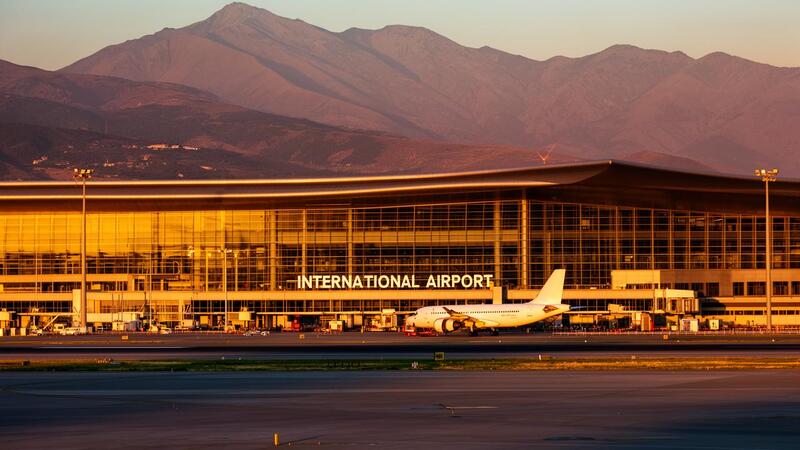
Shota Rustaveli Tbilisi International Airport (TBS) is small, single-terminal, and 17 km from the city center. Most international flights land between midnight and 5am. The good news: everything you need is open around the clock whenever planes are touching down. Here is exactly what to do, in order, when you walk through those arrival doors.
Step 1: Get Into the City
You have four realistic options, depending on the clock and your luggage situation.
City Bus 337 (Daytime Budget Pick)
Runs every 15 to 20 minutes from 7am to 11pm. Fare is 1 GEL with a Georgian card, 1.50 GEL with an international card. Tap contactless at the reader. No cash accepted anywhere on Tbilisi's transit system.
The bus stops at Avlabari Metro, Freedom Square (Pushkin Park stop), and terminates at Station Square by Central Railway Station. Journey time: roughly 60 minutes depending on traffic. Turn right from arrivals and walk to the far end of the departures building to find the bus bay.
Bolt Ride-Hailing (Anytime Flexible Pick)
A Bolt ride to central Tbilisi costs 30 to 35 GEL. Drivers are available 24/7 and usually accept within minutes. XL cars for groups are also bookable.
Heads up: the free airport WiFi frequently blocks ride-hailing apps. You will almost certainly need mobile data (eSIM or local SIM) to book. Pre-install and verify Bolt on your home number before traveling. And never, under any circumstances, accept a ride from someone who approaches you inside the terminal.
Pre-Arranged Private Transfer (Night Arrivals)
Starts from around 55 GEL per car. Your driver meets you inside arrivals with a name sign. The fare is locked at booking and the driver monitors your flight for delays. Available to any destination in Georgia, not just Tbilisi. Ideal for families, heavy luggage, or the 2am crowd.
Rent a Car at the Airport (Best for Road Trips)
If Georgia is more than a city break for you, picking up a car at Tbilisi Airport eliminates the transfer entirely. FSTA meets you at arrivals 24/7 with your car fueled and ready. No deposit, no hidden costs, unlimited mileage. Drive straight to Kakheti wine country, up the Military Highway, or wherever your itinerary starts.
Step 2: Get Connected
Mobile Data
Georgian mobile coverage is excellent, even deep in mountain valleys. Magti is the dominant provider and has a 24-hour kiosk in arrivals. They sell "Tourist Welcome Packages" at the airport, but these cost roughly double what you would pay for an identical data bundle at a Magti shop in the city.
If you can survive without data for an hour, wait and buy your SIM at a regular Magti branch (Rustaveli Avenue or Aghmashenebeli Avenue are the most central). A SIM costs 10 GEL, and unlimited data for 7 days is another 10 GEL. For more on this, see our connectivity guide.
WiFi
Free WiFi covers the terminal. If full-screen ads block the connect button, tap the three dots in your browser's top-right corner and choose "Connect as is."
Step 3: Get Cash (Maybe)
Tbilisi is almost entirely cashless. Cards and mobile wallets work everywhere, from metro turnstiles to street bakeries. You really only need lari for rural areas outside the capital.
ATMs sit inside arrivals on the right before the exit doors. TBC (blue) and Bank of Georgia (orange) both work but charge small withdrawal fees. The freestanding machines just outside customs are payboxes, not ATMs. They do not dispense cash.
Skip the exchange desks in arrivals. City rates are better. Use bank branches or Rico Credit offices downtown. For deeper budgeting advice, see our cost breakdown.
Step 4: Know the Rules
Many nationalities enter Georgia visa-free for up to one year. Others need an e-visa. Since January 1, 2026, travel insurance is mandatory for all visitors, even those with visa-free entry. Verify requirements before flying.
Heading Somewhere Other Than Tbilisi?
- Kakheti (Sighnaghi, Telavi): Take Bus 337 to Isani Metro and transfer from there.
- Yerevan: Bus 337 to Isani, then taxi to Ortachala bus station. Or rent a car for the Tbilisi-Yerevan route.
- Kutaisi, Batumi, northern Georgia: Ride Bus 337 to Station Square and connect by train or marshrutka from Didube.
- Kazbegi, Gudauri, anywhere scenic: Pick up a rental car at the airport and drive.
For the full transport picture, read our intercity travel overview.
Getting Back to TBS
Bus 337 runs citybound from Liberty Square Metro (in front of H&M) from 6am to 10:45pm. Allow 60+ minutes for the journey plus 2 hours at the airport before your flight. A Bolt back costs about 35 GEL, or 45 to 50 GEL if you pre-schedule for an early departure.
FSTA rental customers: we handle free airport drop-off. Drive to the terminal, hand over the keys, and walk in.
The 3am Arrival Playbook
- Book an extra hotel night (the night before your arrival) so you can check in immediately
- Use the Ibis Tbilisi Airport, a 7-minute walk from arrivals, for very early departures or late landings
- Pre-arrange a private transfer so a driver is waiting when you walk out
- Rent a car from FSTA and drive directly to your first stop. We deliver around the clock
Quick Departure Tips
- Check-in desks open 2 hours before departure
- Food options are minimal. Eat before arriving
- One lounge (Prime Class) is available upstairs in departures
- Duty-free wine is overpriced. Buy in the city
- Baggage wrapping: 25 GEL
Frequently Asked Questions — Tbilisi Airport Guide: Your First 60 Minutes
- What is this guide about?
- What to do when you step off the plane at Shota Rustaveli Tbilisi International Airport. Transport into the city, mobile data, cash, visas, and how to handle a 3am arrival.
- When is the best time to follow this guide?
- Most destinations and routes in Georgia are best from May to October. Winter travel works well for cities and ski resorts. Check seasonal notes in the article above for specific timing.
- Do I need a car for this?
- A rental car gives you the most flexibility. Many places covered in this guide are difficult or impossible to reach by public transport. For mountain roads, a 4x4 is recommended.
- Is it safe?
- Georgia is one of Europe's safest countries for travelers. The main risks are road conditions in remote areas, not personal safety. Always carry offline maps and a full tank when heading off main highways.
- How much does it cost?
- Georgia is affordable by European standards. Budget travelers can manage on 40 to 60 USD per day including accommodation, food, and fuel. Car rental starts from around 35 USD per day with FSTA.
Sources & References
- Georgian National Tourism Administration (GNTA) — official tourism body for Georgia
- UK FCDO — Georgia travel advice — safety and entry requirements
- US State Department — Georgia — travel advisory
- Australian DFAT — Georgia — travel advice
- Georgia (country) — Wikipedia
- Tourism in Georgia — Wikipedia
Pros and Cons: Offbeat vs Popular Destinations
Pros of Offbeat Destinations
- Fewer crowds — most sites have no other visitors at all
- More authentic experiences — interact with locals rather than tour groups
- Lower costs — accommodation, food, and activities are cheaper outside tourist hubs
- Better photography opportunities — no crowds, untouched landscapes, dramatic light
- Greater sense of discovery — explore places not yet covered by mainstream guidebooks
Cons of Offbeat Destinations
- Harder access — many require a 4x4 or long drives on unpaved roads
- Fewer amenities — limited guesthouses, restaurants, and fuel stations
- Less safety information — remote areas may lack cell coverage and emergency services
- Minimal signage — navigation depends on offline maps and local directions
- Seasonal restrictions — mountain destinations are only accessible from June to September