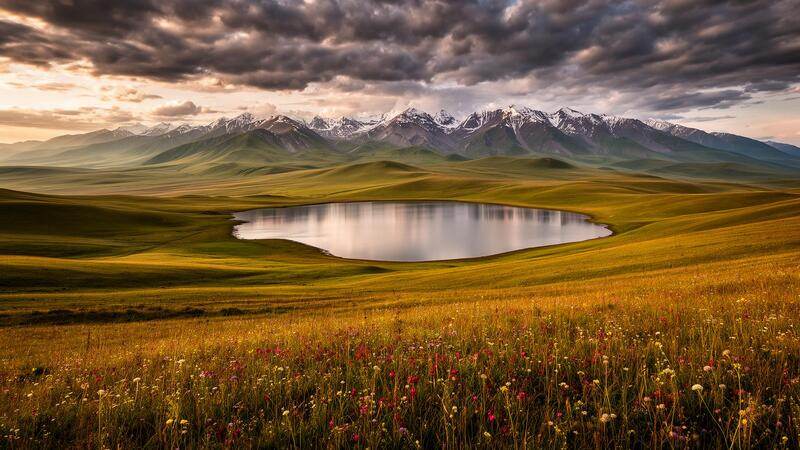
Most visitors to Georgia hear about Svaneti and Racha when they ask about road trips. Almost nobody mentions the southern region of Samtskhe-Javakheti. That is a mistake. This sprawling territory between Tbilisi and the Turkish and Armenian borders contains cave monasteries carved into cliff faces, over 70 alpine lakes on a volcanic plateau, medieval fortresses perched above gorges, and a food culture unlike anything in the rest of the country.
We have been driving this region for years, and every trip reveals something new. Here is our complete guide to exploring Samtskhe-Javakheti by car.
Why This Region Deserves Your Time
Samtskhe-Javakheti covers three historical provinces: Tori (the lush zone around Borjomi), Meskheti (deep gorges and mountain peaks), and Javakheti (a high volcanic plateau in the south). Each has its own character, cuisine, and landscape. The region sits at a crossroads between Georgia, Turkey, and Armenia, and you can feel that cultural layering in everything from the architecture to the food on your plate.
The Javakheti plateau sits above 2,000 metres and feels like a different country entirely. Endless grasslands roll toward the horizon, dotted with lakes that reflect massive skies. The air is thin and the wind is constant. Down in Meskheti, the terrain shifts to steep river gorges where fortresses cling to clifftops and terraced vineyards climb the banks.
Suggested 4 to 5 Day Itinerary
Day 1: Tbilisi to Borjomi and Surrounding Area
The drive from Tbilisi to Borjomi takes about three hours on a well-maintained highway. Borjomi is famous for its mineral water and the vast Borjomi-Kharagauli National Park, one of the largest protected areas in Europe.
Spend the afternoon walking the park's lower trails or soaking in the sulphur pools at the edge of town. The Chitakhevi area upstream is a good spot for rafting on the Mtkvari River. Several outfitters run one-hour trips covering about 9 km of gentle rapids, perfect for beginners.
Overnight in Borjomi. The town has solid guesthouse and hotel options at every price point.
Day 2: Akhaltsikhe, Saro Village, and Meskhetian Culture
Head south to Akhaltsikhe (about 30 minutes). The restored Rabati Fortress complex dominates the town and gives a condensed overview of the region's layered history, with a mosque, church, and synagogue standing within the same walls.
From Akhaltsikhe, drive into the countryside to Saro, a small ridge-top village above the Chobaretiskhevi River. The 7th-century Archangel Church sits among massive volcanic boulders, the remains of Bronze Age megalithic fortresses. Around the church, look for traditional Darbazuli hall houses with their distinctive pyramid ceilings made of interlocking timber. These structures are partially underground with turf roofs, making them easy to miss if you don't know what to look for.
Stop at a Meskhetian oda house to try the region's distinctive cuisine. Tenili cheese, a hand-pulled string cheese made by stretching curds in hot water, is the signature product. Only a few families still practice the technique. Apokhti (a dried, jerky-style meat) and kada (a sweet-salty nut bread) round out a cuisine built for preservation during times of conflict.
Overnight in Akhaltsikhe.
Day 3: Vardzia, Khertvisi, and the Gorge Road
This is the day for the big attractions. Drive south along the Mtkvari gorge to Khertvisi Fortress, one of Georgia's oldest and most photogenic fortifications. The recently restored walls are accessible, with viewpoints over the confluence of two rivers below.
Continue to Vardzia, the famous cave monastery carved into a sheer cliff face in the 12th century by Queen Tamar. At its peak, the complex held over 6,000 rooms, a church, and an irrigation system. What remains is still staggering in scale.
On the way back, stop at one of the monasteries that welcome visitors for wine tastings. The Meskheti wine tradition is distinct from the famous Kakheti region, using local grape varieties like Chitistvala and Meskhuri Mtsvane. Some monasteries also produce artisanal foods, from chocolate to herbal tinctures.
The road between Vardzia and Akhaltsikhe is excellent and passes through beautiful gorge scenery with terraced vineyards on the hillsides.
Day 4: The Javakheti Plateau and Its Lakes
Head east and south toward the Javakheti plateau. The landscape changes dramatically as you climb. Green valleys give way to open, windswept grasslands at over 2,000 metres.
Lake Paravani is the largest lake in Georgia by surface area and the first major stop. The Poka St. Nino Convent on its southern shore is worth visiting for its artisan shop, where resident nuns sell handmade jams, herbal tinctures, chocolate, and ceramics made from local botanicals.
Continue south to Tabatskuri Lake and Bughdasheni Lake. The Javakheti wetlands are a critical nesting ground for migratory birds, and spring and autumn are peak seasons for birdwatching. Even outside those windows, the scenery is extraordinary.
The villages around here have a distinctly different character from the rest of Georgia. Armenian families make up a significant portion of the population, and you will hear Russian as the common language. Small Doukhobor communities (a Russian Christian sect exiled here in the 19th century) maintain villages with distinctive blue wooden fretwork houses.
Overnight in Ninotsminda or at a guesthouse near Paravani Lake.
Day 5: Return via Tsalka or Direct to Tbilisi
You have two options. The direct route back to Tbilisi via Akhalkalaki takes about 3.5 hours. The more scenic alternative swings northeast through the Tsalka area, passing more volcanic lakes before descending to the capital. This adds about an hour but the landscapes are worth it.
If you have time, combine this trip with our Kvemo Kartli guide for an extended southern Georgia loop.
What Makes the Food Here Different
Samtskhe-Javakheti has one of Georgia's most distinctive regional cuisines. The food was shaped by centuries of conflict. Families needed provisions that could survive long sieges, so salted, dried, and preserved foods became the foundation.
- Tenili cheese: Hand-pulled string cheese made by stretching softened curds into fine threads. An ancient technique only a handful of artisans still practice.
- Apokhti: Dried, jerky-style meat (beef, pork, or goose) eaten alone or stuffed into tiny Meskhetian-style khinkali.
- Kada: A sweet-salty bread layered with crushed walnuts.
- Meskhetian khachapuri: A local variation that is thinner and more layered than its Imeretian or Adjarian cousins.
- Lokokina (snails): Believed to have been introduced by Capuchin missionaries centuries ago, still eaten in many households.
- Lake trout: Fresh from the Javakheti lakes, simply grilled.
Driving Conditions and Road Quality
The main highways through Samtskhe-Javakheti are sealed and in good condition. The route from Tbilisi to Borjomi, Akhaltsikhe, and Vardzia is all on asphalt and manageable in any car.
The Javakheti plateau roads between towns are also paved but narrower. Side roads to villages and lakeshores can be rough gravel. A standard sedan handles about 80% of this itinerary comfortably. For the plateau lakes and any off-road detours, an SUV or 4x4 gives you more flexibility.
The mountain road between Batumi and Akhaltsikhe via the Goderdzi Pass is unpaved and rough. If you plan to connect this trip with the coast, check conditions before attempting it. A Toyota 4Runner or Jeep Wrangler handles it well.
Fuel up in Borjomi, Akhaltsikhe, or Akhalkalaki. Stations in Javakheti are scarce and hours can be unpredictable.
When to Go
- Late May to June: Wildflowers carpet the Javakheti plateau. Pleasant temperatures throughout the region. Check our wildflower guide for specifics.
- July to August: Good for the high plateau (cool and mild even in summer). Meskheti's lower gorges can be very hot.
- September to October: Autumn colours arrive. Fewer visitors. Comfortable driving weather throughout.
- Winter: The Javakheti plateau is snowbound and bitterly cold. Borjomi and Akhaltsikhe remain accessible but many rural guesthouses close.
For a complete seasonal breakdown, see our best time to visit Georgia guide.
Renting a Car for Samtskhe-Javakheti
We deliver to Tbilisi, Tbilisi Airport, Kutaisi, and Batumi. No deposit, unlimited mileage, and prices starting from €30/day for sedans or €55/day for 4x4 vehicles.
This route pairs perfectly with our Svaneti road trip, our Racha guide, or a continuation into Armenia via Yerevan. For more off-the-beaten-path ideas across the country, read our hidden gems guide.
Frequently Asked Questions — Samtskhe-Javakheti by Car Guide
- What is this guide about?
- South Georgia hides one of the country's richest regions. Drive from Borjomi's forests through fortress-lined gorges to the vast Javakheti plateau, where alpine lakes stretch to the Armenian border and ancient cultures blend in ways you won't find anywhere else.
- When is the best time to follow this guide?
- Most destinations and routes in Georgia are best from May to October. Winter travel works well for cities and ski resorts. Check seasonal notes in the article above for specific timing.
- Do I need a car for this?
- A rental car gives you the most flexibility. Many places covered in this guide are difficult or impossible to reach by public transport. For mountain roads, a 4x4 is recommended.
- Is it safe?
- Georgia is one of Europe's safest countries for travelers. The main risks are road conditions in remote areas, not personal safety. Always carry offline maps and a full tank when heading off main highways.
- How much does it cost?
- Georgia is affordable by European standards. Budget travelers can manage on 40 to 60 USD per day including accommodation, food, and fuel. Car rental starts from around 35 USD per day with FSTA.
Sources & References
- Georgian National Tourism Administration (GNTA) — official tourism body for Georgia
- UK FCDO — Georgia travel advice — safety and entry requirements
- US State Department — Georgia — travel advisory
- Australian DFAT — Georgia — travel advice
- Georgia (country) — Wikipedia
- Tourism in Georgia — Wikipedia
Pros and Cons: Offbeat vs Popular Destinations
Pros of Offbeat Destinations
- Fewer crowds — most sites have no other visitors at all
- More authentic experiences — interact with locals rather than tour groups
- Lower costs — accommodation, food, and activities are cheaper outside tourist hubs
- Better photography opportunities — no crowds, untouched landscapes, dramatic light
- Greater sense of discovery — explore places not yet covered by mainstream guidebooks
Cons of Offbeat Destinations
- Harder access — many require a 4x4 or long drives on unpaved roads
- Fewer amenities — limited guesthouses, restaurants, and fuel stations
- Less safety information — remote areas may lack cell coverage and emergency services
- Minimal signage — navigation depends on offline maps and local directions
- Seasonal restrictions — mountain destinations are only accessible from June to September