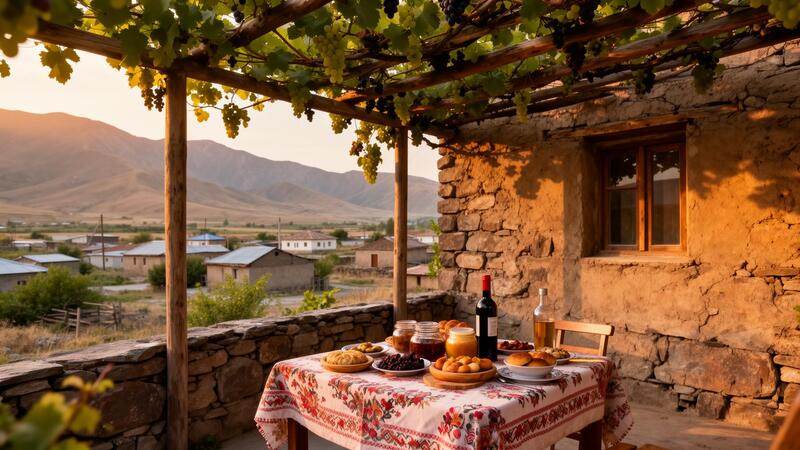
Georgia and Armenia are not mass tourism destinations. Visitor numbers are growing every year, but the infrastructure is still developing, the industry is still finding its shape, and the economic impact of each individual traveller is proportionally much larger than it would be in Western Europe. This creates both an opportunity and a responsibility. The decisions you make about where to spend your money, how you interact with communities, and how you move through the landscape genuinely matter here.
This is not a guilt-trip guide. It is a practical one. Most responsible travel in the Caucasus comes down to simple choices: eating at family restaurants instead of chains, staying in locally owned guesthouses, buying directly from producers, and driving through regions that rarely see tourists. If you are exploring by rental car, you already have the most powerful tool for responsible travel: the ability to go where buses do not.
Why Responsible Tourism Matters in the Caucasus
Both Georgia and Armenia face significant economic challenges. Armenia has experienced continuous emigration since independence in 1991, with tens of thousands of people leaving each year in search of better opportunities abroad. The population has declined from over 3.5 million to under 3 million. Georgia faces similar pressures, particularly in rural areas where young people move to Tbilisi or abroad. In both countries, entire villages are depopulating.
Tourism is one of the few industries that can reverse this trend. When visitors spend money in small towns, eat at local restaurants, and stay in family-run guesthouses, they create direct economic incentives for people to stay. A guesthouse in Tusheti or a wine cellar in Armenia's Vayots Dzor region represents someone's decision to build a livelihood in their home community rather than leaving.
The Caucasus is also at a tipping point. As tourism grows, the choices that travellers and businesses make now will determine whether the region develops sustainably or falls into the patterns of over-tourism seen elsewhere. You are not just a visitor. You are, in a small way, part of the answer.
Where to Eat: Support Local Kitchens
Both Georgia and Armenia have extraordinary food traditions, and the best versions of that food are almost always found in small, family-run restaurants rather than tourist-oriented establishments.
- In Tbilisi: Seek out neighbourhood restaurants in areas like Vera, Saburtalo, and Avlabari rather than sticking to the heavily touristed strip along Shardeni Street. See our Tbilisi food guide for specific recommendations.
- In Yerevan: The restaurants around Republic Square are fine, but the real flavour is in places like Anush on Amiryan Street or the family-run spots in the Kond neighbourhood. Visit the GUM Market for the most direct connection to Armenian food culture.
- On the road: Family restaurants along highways and in small towns are almost always better value and better food than anything in a tourist centre. In Georgia, look for hand-painted signs advertising khinkali or khachapuri. In Armenia, roadside khorovats (barbecue) restaurants near rivers are a tradition worth seeking out.
- Wine: Both countries have ancient winemaking traditions. In Georgia's Kakheti region, many families operate small wineries with tastings available. In Armenia, the Areni wine region in Vayots Dzor is developing a similar model. Buying directly from producers supports the local wine economy and gets you better wine than any shop.
Where to Stay: Choose Locally Owned
The accommodation landscape in both countries ranges from international hotel chains in the capitals to family guesthouses in mountain villages. From a responsible travel perspective, the choice is straightforward: locally owned accommodation keeps money in the community.
- Family guesthouses: These are the backbone of rural tourism in both countries. In Georgia, guesthouses in Svaneti, Tusheti, and Racha typically include home-cooked meals and local wine. In Armenia, guesthouses in Dilijan, Goris, and Gyumri offer similar warmth. Expect to pay EUR 20 to 40 per night including meals.
- Boutique hotels: A growing number of small, locally designed hotels are opening in both capitals. These tend to employ local staff, source locally, and invest profits in the community.
- Booking platforms: When using booking platforms, filter for locally owned properties. Read reviews for mentions of local hosts and home-cooked food as indicators of genuine family operations.
What to Buy: Go Direct to Producers
Souvenir shopping in the Caucasus can either support local artisans or line the pockets of middlemen who import goods from China. The difference is usually obvious.
- In Yerevan: The Vernissage market (weekends) is the best place for handmade crafts, antiques, and local products. For a deeper guide, see our Yerevan shopping guide. Nairian for natural cosmetics and HDIF for handmade household items are social enterprises worth supporting.
- In Tbilisi: The Dry Bridge flea market sells antiques and local crafts. Numerous small shops in the old town sell handmade ceramics, textiles, and enamelwork. Look for items marked as made in Georgia.
- Food souvenirs: Churchkhela, dried fruit, spices, honey, and wine bought directly from producers at markets or roadside stalls are both better quality and more economically impactful than packaged products from supermarkets. The GUM Market in Yerevan and the Deserter Market in Tbilisi are the best places to buy food directly from vendors.
How to Drive Responsibly
If you are exploring by rental car, you have unique opportunities to support communities that most tourists never reach:
- Take the less-travelled routes: Kvemo Kartli, Guria, and Samtskhe-Javakheti in Georgia receive a fraction of the visitors that Svaneti and Kakheti do, but they have equally compelling landscapes and cultural sites. Spreading tourism across regions distributes economic benefits more equitably.
- Buy fuel and supplies locally: Fill up at petrol stations in small towns rather than in cities. Buy water, snacks, and supplies from village shops.
- Drive carefully through villages: Rural villages in both countries often have children, livestock, and pedestrians sharing the road. Slow down. The speed limit through villages is typically 40 km/h in Georgia and 30 km/h in Armenia.
- Respect sacred sites: When visiting monasteries and churches, dress modestly, keep voices low, and ask before photographing worshippers. These are active religious sites, not museums.
- Leave no trace: Mountain areas in both countries, particularly Tusheti and upper Svaneti, have limited waste management infrastructure. Carry your rubbish out with you.
Social Enterprises and Community Projects
Both countries have a growing ecosystem of social enterprises that channel tourism revenue into community development:
- ONEArmenia: A non-profit that creates tourism resources (including the Inside Yerevan Map and the HIKEArmenia app) and invests in community development projects across Armenia. Their crowdfunded initiatives include trail maintenance, wine tourism infrastructure, and support for local entrepreneurs.
- HIKEArmenia: A hiking resource with marked trails, maps, and community guides. Using their app or website helps fund trail maintenance and local guide training in rural Armenia.
- Caucasus Nature Fund: Supports protected areas in Georgia, Armenia, and Azerbaijan. Visiting national parks (Tusheti, Borjomi-Kharagauli, Dilijan) and paying entrance fees directly supports conservation.
- Community-Based Tourism: In Georgia, organisations like the Tusheti Development Fund support guesthouse owners, trail maintenance, and cultural preservation in remote mountain communities.
The Emigration Challenge
Armenia's emigration crisis is one of the most pressing social issues in the Caucasus. With the global diaspora outnumbering the domestic population, every young person who stays and builds a business in Armenia is swimming against a powerful current. Tourism directly supports these people.
When you stay at a guesthouse in Goris run by a young couple who chose to stay, when you eat at a restaurant in Gyumri opened by someone who returned from abroad, when you buy wine from a family vineyard in Vayots Dzor, you are not just having a transaction. You are validating someone's decision to invest in their own community.
Georgia faces similar dynamics, particularly in mountain regions. Guesthouses in Svaneti and Tusheti are often the primary income source for families who would otherwise have no economic reason to remain in increasingly depopulated villages.
Practical Tips for Responsible Travel
- Tip generously. Restaurant staff in both countries earn modest wages. A 10 to 15 percent tip at restaurants is appropriate and appreciated.
- Ask permission before photographing people. Especially at markets, religious sites, and in rural areas.
- Learn a few words. Gamarjoba (hello in Georgian), barev (hello in Armenian), and madloba/shnorhakalutyun (thank you) go a long way.
- Accept hospitality graciously. If someone offers you food, wine, or fruit, accept it. Refusing can be perceived as rude. Reciprocate with genuine interest in the person and their story.
- Carry cash in small denominations. Rural vendors and guesthouse owners often cannot break large notes.
- Use local guides when available. In both countries, local guides provide income to communities and add depth to your experience that guidebooks cannot match. See our guide to hiring a driver in Georgia.
- Travel slowly. Spending more time in fewer places means spending more money in each community. Two nights in a village guesthouse has more impact than driving through without stopping.
Frequently Asked Questions
Is responsible travel more expensive?
Usually not. Family guesthouses are cheaper than hotels. Local restaurants are cheaper than tourist-oriented ones. Market produce is cheaper than supermarket food. Responsible travel in the Caucasus often costs less, not more. See our budget guide for cost estimates.
How do I find family guesthouses in rural areas?
Booking platforms list many, but the best way is to drive to a village and ask. In Georgia, signs reading "სასტუმრო" (hotel/guesthouse) or simply asking at a village shop will connect you. In Armenia, the HIKEArmenia app and ONEArmenia resources list community-based accommodation.
Is it safe to stay in remote villages?
Yes. Both Georgia and Armenia are exceptionally safe countries, and rural communities are among the safest environments for travellers. See our safety guide and Caucasus travel tips.
Can I volunteer while travelling?
Several organisations accept short-term volunteers, but approach this carefully. Unskilled volunteer tourism can displace local workers. If you want to contribute, donating to established organisations like ONEArmenia or the Caucasus Nature Fund is usually more effective than volunteering for a few days.
Does renting a car support the local economy?
Yes. Renting from a locally owned company keeps revenue in the country and supports local employment. A rental car from a Georgian operator also gives you the freedom to reach communities that organised tours skip entirely, spreading tourism revenue to areas that need it most.
Sources & References
- Georgian National Tourism Administration (GNTA) — official tourism body for Georgia
- UK FCDO — Georgia travel advice — safety and entry requirements
- US State Department — Georgia — travel advisory
- Australian DFAT — Georgia — travel advice
- Georgia (country) — Wikipedia
- Tourism in Georgia — Wikipedia
Pros and Cons: Offbeat vs Popular Destinations
Pros of Offbeat Destinations
- Fewer crowds — most sites have no other visitors at all
- More authentic experiences — interact with locals rather than tour groups
- Lower costs — accommodation, food, and activities are cheaper outside tourist hubs
- Better photography opportunities — no crowds, untouched landscapes, dramatic light
- Greater sense of discovery — explore places not yet covered by mainstream guidebooks
Cons of Offbeat Destinations
- Harder access — many require a 4x4 or long drives on unpaved roads
- Fewer amenities — limited guesthouses, restaurants, and fuel stations
- Less safety information — remote areas may lack cell coverage and emergency services
- Minimal signage — navigation depends on offline maps and local directions
- Seasonal restrictions — mountain destinations are only accessible from June to September