Table of Contents
- Why Overnight Matters
- The Palace District
- Caravanserai Courtyards and Old Trade Routes
- Food, Halva, and Markets
- Easy Add-Ons
- How Sheki Fits the Road
- Season Notes
- FSTA Route Support
TL;DR: A slower Sheki guide for travelers who want Silk Road atmosphere, palace details, caravanserai courtyards, sweets, tea, and an overnight stay.
Overview
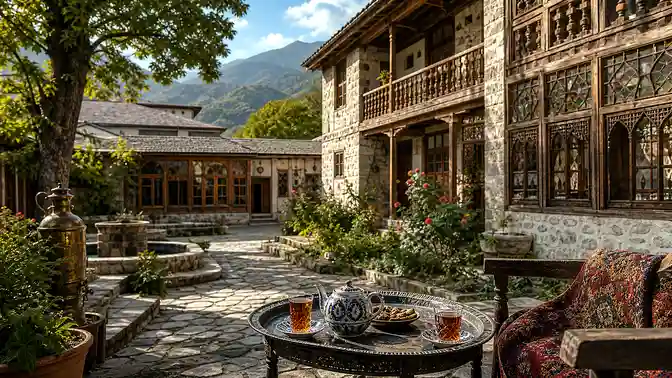
Sheki is one of those towns that loses half its charm when treated as a lunch stop. On paper, the sights sound simple: a palace, a caravanserai, sweets, old streets, maybe a side trip to Kish. In person, the value is in the pacing. Sheki needs soft light, unhurried tea, and enough time for the trade-town atmosphere to settle.
If your Azerbaijan route allows it, stay two nights. One night is the minimum. A day trip from Baku is technically possible on paper but rarely satisfying because the direct drive alone takes around 4.5 to 5.5 hours each way.
Why Overnight Matters
Most visitors arrive in the same middle part of the day. Overnighting gives you the palace district in the morning, quiet streets before dinner, and a better chance of seeing the caravanserai courtyards without rushing. It also makes room for food, which is essential in Sheki.
Book accommodation near the historic core if you want to walk. Drivers should ask the guesthouse about parking before arrival because older streets can be narrow and confusing.
The Palace District
The Khan's Palace is the obvious highlight, famous for painted surfaces, carved wood, and shebeke stained-glass windows assembled without nails or glue. Go early if you can. The visit itself is not long, but the surrounding district deserves extra time for smaller buildings, walls, trees, and views toward the hills.
Photography rules can change by room and site, so follow staff instructions. The details are delicate; the point is to look carefully, not to force a picture.
Caravanserai Courtyards and Old Trade Routes
Sheki's caravanserai buildings are a reminder that the town grew around movement: merchants, animals, silk, food, and long-distance trade. Walk into the courtyard slowly and imagine the practical side of the architecture: storage below, rooms above, shade, security, and space to rest.
If you can stay in a caravanserai-style hotel or visit at a quiet hour, do it. Even a short tea break in the courtyard helps the town make sense.
Food, Halva, and Markets
Sheki halva is the famous sweet, layered with nuts and syrup, and it is rich enough to share. Look for small bakeries and ask what is fresh. Piti, the local clay-pot stew, is another classic, usually eaten in stages with bread, broth, chickpeas, and lamb.
The market is best in the morning. Go for dried fruit, nuts, local produce, and the ordinary rhythm of town life rather than souvenirs alone.
Easy Add-Ons
Kish village is the most useful short side trip, with an old church and quieter lanes. If you have a car, keep the second day light: Kish, a viewpoint, lunch, then back to Sheki. Do not stack Lahic, Gabala, and a long return drive onto the same day unless you enjoy being tired.
How Sheki Fits the Road
Sheki pairs naturally with Lahic, Gabala, or the Georgia border, but it should not be squeezed between them without an overnight. If you are continuing toward Georgia, confirm the current border situation and transport rules before treating Sheki as an exit point. If you are returning to Baku, leave after breakfast and avoid stacking every road stop on the way back.
Season Notes
Spring brings greenery and pleasant walking weather. Summer can be hot in the middle of the day, so use early mornings for the palace district. Autumn is excellent for light and food. Winter is quieter, but some smaller places may keep shorter hours.
FSTA Route Support
FSTA can help place Sheki inside the Baku to Sheki route, a Georgia-Azerbaijan itinerary, or a longer Caucasus trip. The usual advice is simple: drive less on Sheki days and let the town do its work.