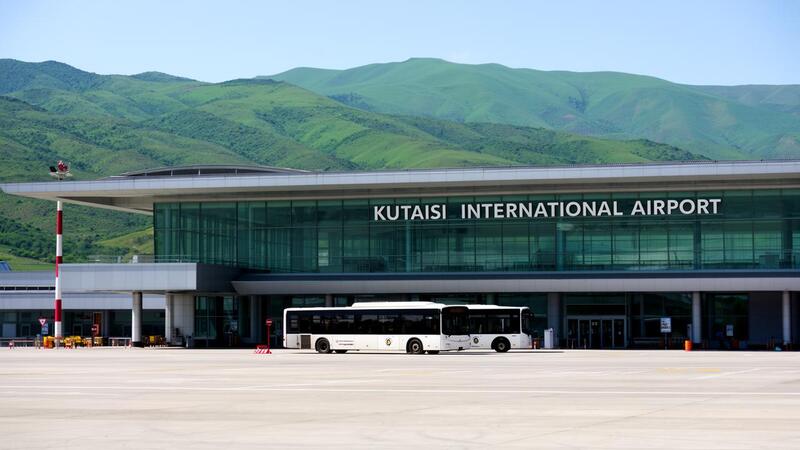
David the Builder International Airport (KUT) sits 23 km west of Kutaisi, about 40 minutes by road. It is a small, single-terminal facility rebuilt in 2021, used primarily by Wizz Air for budget routes across Europe. The airport is straightforward, but a few things are worth knowing before you touch down.
Four Ways to Reach Kutaisi City
1. The Official Airport Shuttle (Cheapest Reliable Option)
A dedicated shuttle bus runs 24/7, departing every two hours: 1am, 3am, 5am, 7am, 9am, 11am, 1pm, 3pm, 5pm, 7pm, 9pm, 11pm. It waits directly in front of arrivals. Fare is 5 GEL, card only. No cash accepted.
The route makes two stops (Gamsakhurdia Street, Kikvidze Park) before terminating at the Red Bridge near the Green Bazaar. Journey: roughly 40 minutes. Modern bus with proper luggage space.
2. Bolt Ride-Hailing (Fastest Door-to-Door)
Bolt works at Kutaisi Airport around the clock. Drivers camp near the airport and accept rides within minutes of flights landing. Flat fare of 25 to 30 GEL to the city center. Pre-install and verify the app before arriving in Georgia.
Critical: Do not accept rides from anyone who approaches you inside or outside the terminal, regardless of what they claim.
3. Pre-Booked Private Transfer (Best for Night Arrivals)
From around 50 GEL per car with a meet-and-greet service. Your driver tracks your flight and waits in arrivals. The highway into Kutaisi is long, straight, and poorly lit after dark, with frequent high-speed overtaking. A vetted professional driver is worth the peace of mind.
4. Rent a Car at the Airport (Best for Exploring Western Georgia)
If western Georgia is your destination, renting a car at Kutaisi Airport is the most efficient start. FSTA delivers your car to the terminal 24/7. No deposit, unlimited mileage. Drive straight to Martvili Canyon, Racha, Svaneti, or the Black Sea coast.
For rough mountain roads, see our Kutaisi 4x4 fleet.
Connecting Directly to Other Cities
To Tbilisi
Three coach companies (Georgian Bus, OmniBus, Metro Georgia) run modern buses timed to departing flights. Fare: 25 GEL one-way. Travel time: 3.5 hours with rest stops. USB chargers, WiFi, and water included. Book online or at the airport kiosk. Alternatively, rent a car and stop at Gori, Uplistsikhe, or anywhere else along the way.
To Batumi
Coaches run direct for 20 to 25 GEL (2 hours). High-speed trains to Batumi also depart from Kopitnari Railway Station, 2.5 km from the airport. Free shuttle buses connect the terminal to the station.
To Gudauri (Winter Only)
Georgian Bus runs a seasonal transfer to Gudauri for 60 GEL (6 hours, with a vehicle changeover).
Arrival Essentials
Cash
Kutaisi is card-friendly. ATMs are inside arrivals on the right. TBC charges 5 GEL and Bank of Georgia charges 3 GEL per withdrawal. For zero-fee ATMs with higher limits, use CartuBank or Basis Bank in the city. Exchange desks are available but city rates are better.
Mobile Data
Magti and other kiosks in arrivals are open 24 hours. Airport tourist packages cost roughly double the standard rate. Unless you need data immediately, buy your SIM at a regular Magti branch in Kutaisi city (St. Nino Street or Gamsakhurdia Avenue). Bring your passport. See our SIM card guide for full details.
WiFi
Free throughout the terminal. If ads block the login, tap the three dots in your browser and select "Connect as is."
Food
A Smart supermarket with a bakery sits in arrivals. Airside has Coffeesta and a Subway. Eat in the city for anything substantial.
Returning to Kutaisi Airport
The shuttle departs from the Red Bridge every 2 hours (same schedule). Bolt costs 25 to 30 GEL and can be pre-scheduled up to 90 days ahead.
Wizz Air passengers, read carefully: You must check in physically at the airport desk even if you checked in online. PDF boarding passes (digital or printed) are not accepted by security. Bring your passport, present it at the counter, and receive a physical boarding pass. Check-in opens 2 hours before departure. Double check-in (online + physical) is mandatory.
FSTA customers: free airport drop-off. Drive to the terminal and hand us the keys.
Why Drive from Kutaisi
Kutaisi is the gateway to Svaneti, Racha, Imereti's canyons, and the Black Sea coast. A rental car gives you total flexibility. With FSTA:
- No deposit, no hidden fees
- Unlimited mileage on every car
- 24/7 airport delivery
- Cross-border travel to Armenia
- 4x4 vehicles for mountain roads
Browse our full fleet or see our Kutaisi rental page.
Frequently Asked Questions — Kutaisi Airport Guide (2026)
- What is this guide about?
- Flew into Kutaisi with Wizz Air? Here is how to reach the city, connect to Tbilisi or Batumi, buy mobile data, avoid overpriced transfers, and handle the mandatory Wizz Air check-in quirk.
- When is the best time to follow this guide?
- Most destinations and routes in Georgia are best from May to October. Winter travel works well for cities and ski resorts. Check seasonal notes in the article above for specific timing.
- Do I need a car for this?
- A rental car gives you the most flexibility. Many places covered in this guide are difficult or impossible to reach by public transport. For mountain roads, a 4x4 is recommended.
- Is it safe?
- Georgia is one of Europe's safest countries for travelers. The main risks are road conditions in remote areas, not personal safety. Always carry offline maps and a full tank when heading off main highways.
- How much does it cost?
- Georgia is affordable by European standards. Budget travelers can manage on 40 to 60 USD per day including accommodation, food, and fuel. Car rental starts from around 35 USD per day with FSTA.
Sources & References
- Georgian National Tourism Administration (GNTA) — official tourism body for Georgia
- UK FCDO — Georgia travel advice — safety and entry requirements
- US State Department — Georgia — travel advisory
- Australian DFAT — Georgia — travel advice
- Georgia (country) — Wikipedia
- Tourism in Georgia — Wikipedia
Pros and Cons: Offbeat vs Popular Destinations
Pros of Offbeat Destinations
- Fewer crowds — most sites have no other visitors at all
- More authentic experiences — interact with locals rather than tour groups
- Lower costs — accommodation, food, and activities are cheaper outside tourist hubs
- Better photography opportunities — no crowds, untouched landscapes, dramatic light
- Greater sense of discovery — explore places not yet covered by mainstream guidebooks
Cons of Offbeat Destinations
- Harder access — many require a 4x4 or long drives on unpaved roads
- Fewer amenities — limited guesthouses, restaurants, and fuel stations
- Less safety information — remote areas may lack cell coverage and emergency services
- Minimal signage — navigation depends on offline maps and local directions
- Seasonal restrictions — mountain destinations are only accessible from June to September