Table of Contents
- Guesthouse Tables
- Tea, Coffee, and Time
- Toasts and Alcohol
- Roadside Stands and Village Shops
- How to Say No Well
- Pay Fairly
- Driving Etiquette
- Gifts and Gratitude
- Hospitality and Safety
- Language Gestures
- FSTA Route Support
TL;DR: Hospitality across the Caucasus, from guesthouse tables and tea stops to toasts, village shops, fair payment, language gestures, and road-trip etiquette.
Overview
Hospitality in the Caucasus is real, but it is not a performance arranged for visitors. It happens around guesthouse tables, tea glasses, roadside fruit, village shops, workshop doors, and moments when someone helps you solve a small practical problem. The best way to receive it is with gratitude and common sense.
On a road trip, hospitality often appears because you are moving slowly enough to stop.
Guesthouse Tables
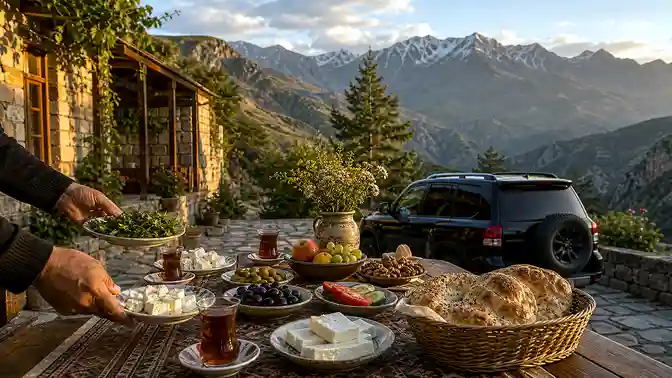
In Georgia, Armenia, and Azerbaijan, family-run guesthouses can feel like part accommodation, part kitchen, part local advice centre. Meals may be generous, homemade, and far more memorable than restaurant dinners. Ask what is included when booking and pay for extra meals without making it awkward.
Tea, Coffee, and Time
Tea can become a long pause in Azerbaijan or Turkey. Coffee can slow an Armenian or Georgian afternoon. If you are invited to sit, understand that the social value may matter more than the drink itself. Accept when you can, decline gently when you need to drive.
Toasts and Alcohol
In Georgia especially, toasts can turn dinner into an evening. This can be wonderful, but drivers need boundaries. It is acceptable to say you are driving early, switch to soft drinks, or stop after one glass. Safety is not rude.
Roadside Stands and Village Shops
Buy fruit, honey, bread, churchkhela, herbs, or water from small roadside sellers when it fits the route. These stops support local families and create the small interactions that make a trip feel grounded.
How to Say No Well
A warm refusal is a skill. Smile, thank people, explain simply, and stay consistent. You do not have to accept every drink, every invitation, or every detour to be respectful.
Pay Fairly
Do not bargain aggressively with guesthouses, guides, craft makers, or village drivers. In remote areas, tourism income can be one reason families stay. Fair payment keeps the places travelers love alive.
Driving Etiquette
Do not block village lanes for photos. Do not drive onto pasture without permission. Slow down near animals, children, and houses. A car gives access, not entitlement.
Gifts and Gratitude
Small gifts are appreciated when you are hosted privately, but they are not required for paid accommodation. Photos sent later, fair reviews, direct bookings, and recommending a good guesthouse to future travelers can matter more than trinkets.
Hospitality and Safety
Warmth does not cancel judgement. You can enjoy generosity while still keeping track of your drink, your route, your driving limits, and your personal boundaries. The healthiest travel relationships are mutual, not one-sided.
Language Gestures
Learn hello, thank you, cheers, and delicious in the country you are visiting. These tiny words matter at guesthouse tables and roadside stalls. They also signal that you understand hospitality is a relationship, not a service button.
If a host helps with road advice, translation, or a driver call, acknowledge the effort. Sometimes the most useful hospitality is practical problem-solving, not a dramatic feast.
FSTA Route Support
FSTA can help build slower road-trip days that leave room for real hospitality instead of squeezing every village into a stopwatch itinerary.